Salesforce Admin vs Salesforce Developer: Which Career Is Right for You
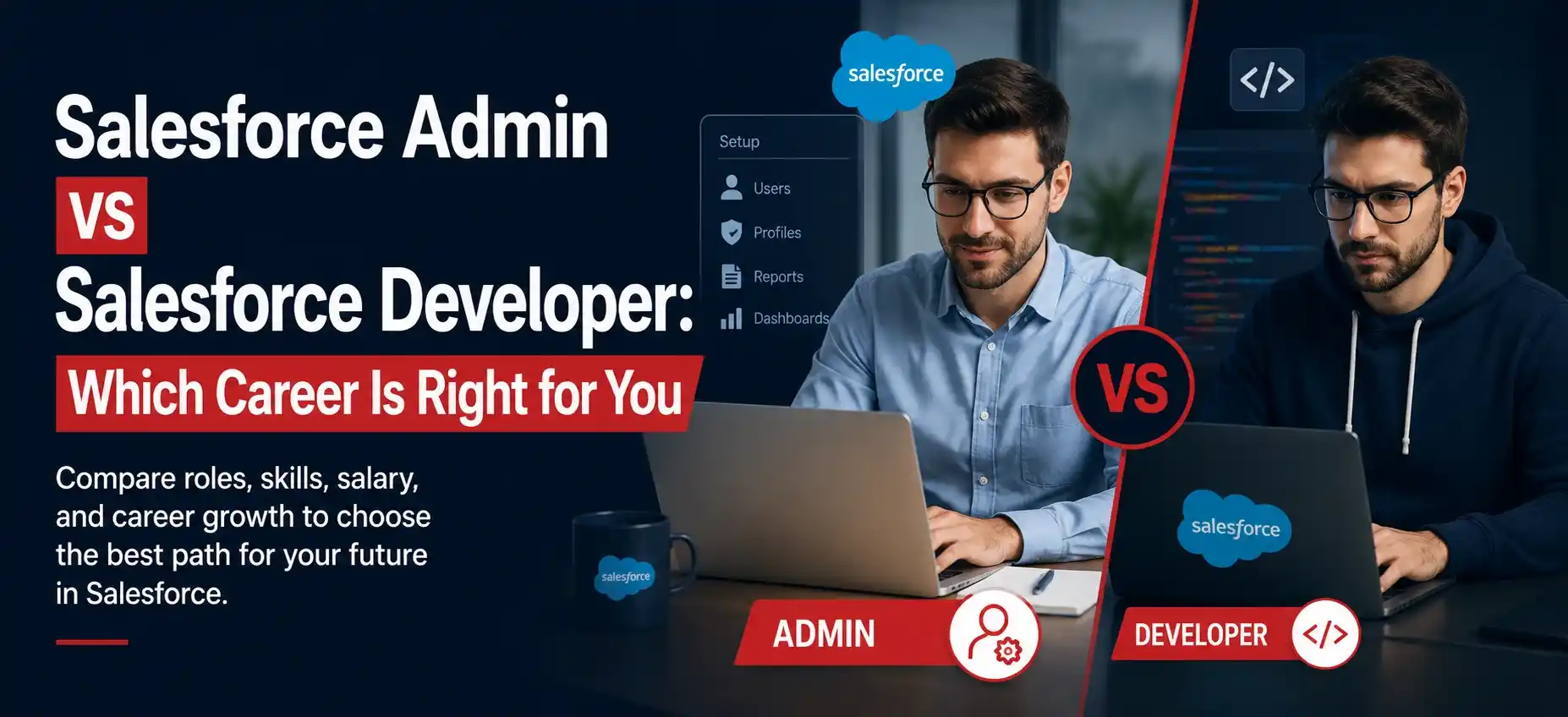
The demand for Salesforce professionals continues to grow as organizations across industries rely on Salesforce to manage customer relationships, automate business processes, and improve productivity. If you're planning to build a career in the Salesforce ecosystem, one of the first questions you'll face is whether to become a Salesforce Administrator or a Salesforce Developer.
Both career paths offer excellent job opportunities, attractive salaries, and long-term growth. However, they require different skills, responsibilities, and learning approaches. Choosing the right role depends on your educational background, technical knowledge, career aspirations, and interest in coding.
Whether you're exploring Salesforce Training in India, looking for a Salesforce Administrator Course, or planning to enroll in a Salesforce Developer Course, understanding the differences between these two roles will help you make the right career decision.
In this guide, we'll compare Salesforce Admin and Salesforce Developer in detail, including their roles, required skills, certifications, salary potential, career opportunities, and the best learning path for beginners.
Understanding the Salesforce Ecosystem
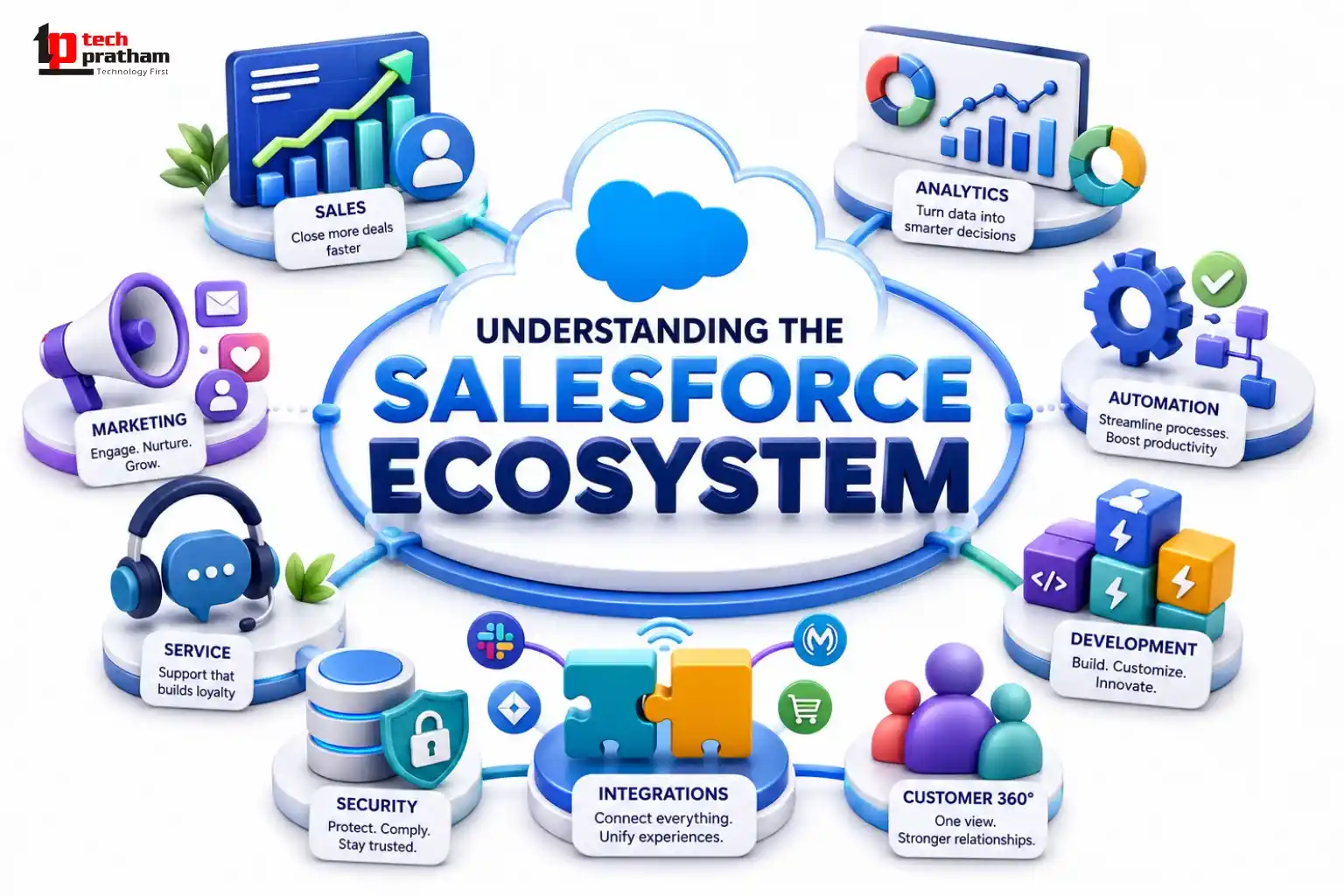
Salesforce is the world's leading cloud-based Customer Relationship Management (CRM) platform. Businesses use it to manage customer data, sales, marketing campaigns, customer support, analytics, and business automation.
As Salesforce adoption grows, companies need professionals who can configure, customize, and enhance the platform. This is where Salesforce Administrators and Salesforce Developers play different but equally important roles.
If you're new to Salesforce, starting with professional Salesforce Training in India can provide the practical knowledge and hands-on experience needed to begin your career confidently.
What Does a Salesforce Administrator Do?
A Salesforce Administrator is responsible for managing and optimizing the Salesforce platform for business users. Instead of writing code, administrators configure Salesforce using built-in tools to improve business processes and user productivity. Professionals who complete Salesforce Administrator Training learn how to customize the platform, manage users, create reports and dashboards, automate workflows, and maintain data quality.
Many learners also choose Salesforce Admin Training in India because it combines live instructor-led sessions, practical assignments, and real-world projects that prepare them for industry requirements.
Key Responsibilities of a Salesforce Administrator
- User and role management
- Security settings and permissions
- Creating reports and dashboards
- Workflow automation using Salesforce Flow
- Data management and data import/export
- Custom objects and fields
- Page layouts and Lightning App Builder
- Validation rules
- Approval processes
- Supporting business users
A Salesforce Administrator Course is an excellent choice for beginners who want to enter the CRM industry without prior programming experience.
What Does a Salesforce Developer Do?
A Salesforce Developer focuses on extending Salesforce capabilities through coding and custom application development. Developers create solutions that go beyond standard platform configuration by using programming languages and Salesforce development tools. Students enrolled in a Salesforce Developer Course learn how to build custom applications, automate complex business processes, integrate external systems, and develop scalable Salesforce solutions.
Choosing Salesforce Developer Training in India allows learners to gain practical coding experience through real-time projects and industry-focused assignments.
Key Responsibilities of a Salesforce Developer
- Apex programming
- Lightning Web Components (LWC)
- Visualforce development
- REST and SOAP API integration
- Custom application development
- Business logic implementation
- Trigger development
- Salesforce deployment
- Code testing and debugging
- Performance optimization
If you enjoy programming, logical thinking, and software development, becoming a Salesforce Developer can be a rewarding career path.
Salesforce Admin vs Salesforce Developer: Quick Comparison
Both Salesforce Administrators and Salesforce Developers play essential roles in helping organizations maximize the value of the Salesforce platform. While a Salesforce Administrator focuses on configuring, managing, and optimizing CRM processes without coding, a Salesforce Developer builds custom applications and advanced business solutions using programming languages like Apex and Lightning Web Components. The comparison below highlights the key differences to help you choose the career path that best aligns with your skills and goals.
Skills Required for a Salesforce Administrator
A successful Salesforce Administrator combines CRM knowledge with business process understanding. Organizations look for professionals who can configure Salesforce efficiently and improve user productivity.
Essential Skills
- Salesforce CRM fundamentals
- User management
- Security and sharing settings
- Reports and dashboards
- Salesforce Flow
- Data Loader
- Business process automation
- Communication skills
- Analytical thinking
- Problem-solving
Completing Salesforce Administrator Certification Training helps learners prepare for the official certification while gaining hands-on experience with real business scenarios. Earning a Salesforce Administrator Certification or Salesforce Admin Certification also improves credibility and employment opportunities across IT companies, consulting firms, startups, and enterprise organizations.
Skills Required for a Salesforce Developer
A Salesforce Developer requires strong technical knowledge along with expertise in Salesforce development tools.
Essential Skills
- Apex Programming
- Lightning Web Components (LWC)
- JavaScript
- HTML & CSS
- SOQL & SOSL
- Visualforce
- REST & SOAP APIs
- Git and Version Control
- Salesforce DX
- Debugging and Testing
Professionals pursuing Salesforce Developer Certification gain industry-recognized validation of their technical expertise, helping them stand out in a competitive job market.
How to Choose Between Salesforce Administrator and Salesforce Developer
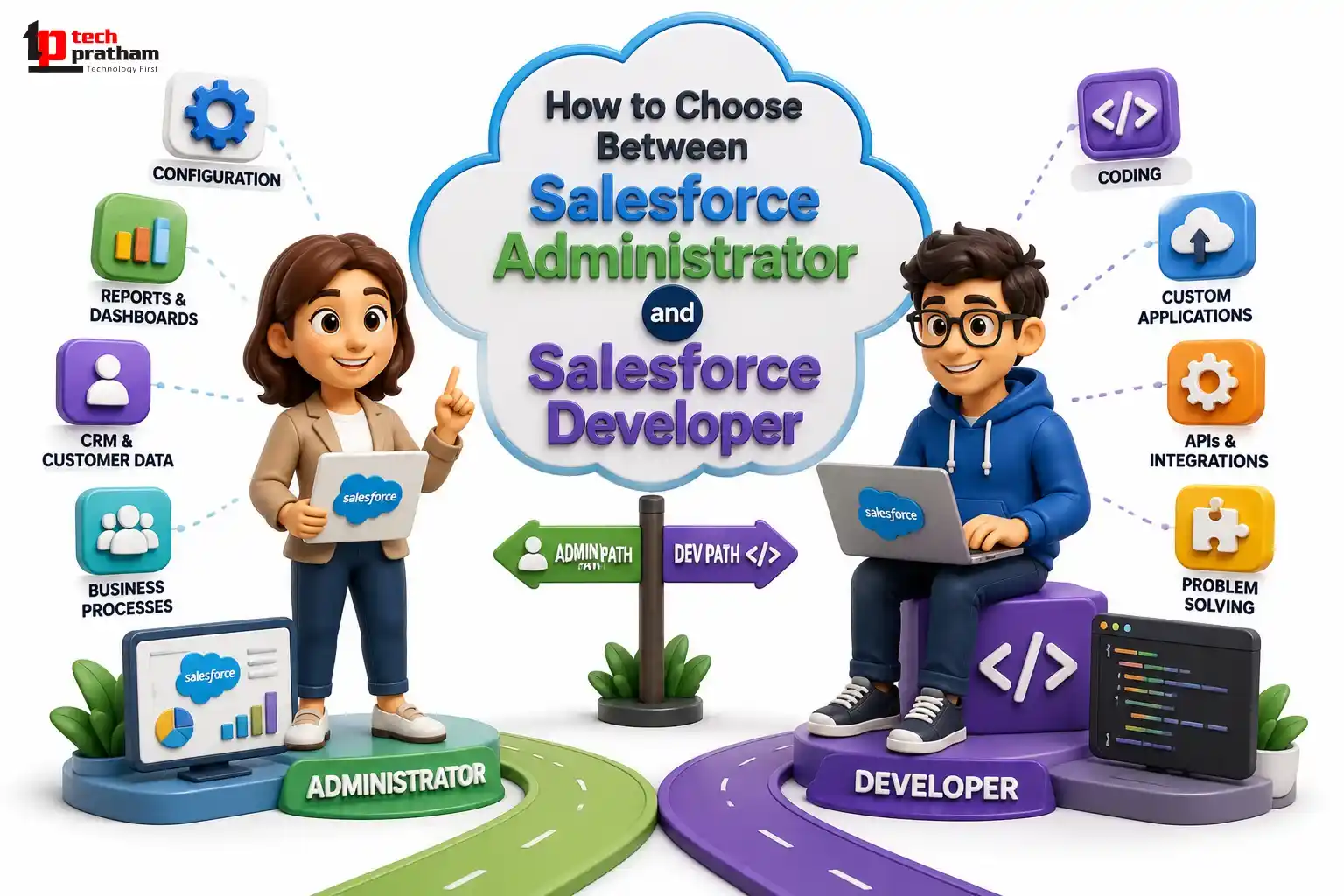
Choosing the right Salesforce career depends on your interests, educational background, and long-term goals.
Choose Salesforce Administrator if you:
- Prefer configuration over coding.
- Enjoy improving business processes.
- Like working with reports, dashboards, and CRM data.
- Want to enter the Salesforce ecosystem without programming experience.
- Have a background in sales, finance, HR, customer support, or business management.
Completing Salesforce Administrator Training or Salesforce Admin Training in India will help you develop practical CRM skills and prepare for Salesforce Administrator Certification.
Choose Salesforce Developer if you:
- Enjoy coding and problem-solving.
- Want to build custom Salesforce applications.
- Have experience with Java, JavaScript, Python, or C#.
- Are interested in APIs, integrations, and application development.
- Aspire to become a technical consultant or software developer.
A Salesforce Developer Course followed by Salesforce Developer Training in India provides the practical coding experience needed to prepare for Salesforce Developer Certification.
Salesforce Admin vs Salesforce Developer: Salary Comparison
Both roles offer attractive salaries, but compensation varies depending on experience, certifications, technical skills, and organization.
Salary figures vary based on location, company, project experience, and certifications.
Salesforce Certifications: Which One Should You Choose?
Salesforce certifications are globally recognized credentials that validate your knowledge, practical skills, and ability to work with the Salesforce platform. Whether you want to become a Salesforce Administrator or a Salesforce Developer, earning the right certification can improve your credibility, increase your earning potential, and help you stand out in a competitive job market.
Most employers prefer certified professionals because certifications demonstrate that you understand Salesforce best practices and can apply your knowledge to real-world business scenarios. Completing Salesforce Training in India with hands-on projects and certification guidance can significantly improve your chances of passing the certification exam on your first attempt.
Salesforce Administrator Certification Path
If you want to build a career as a Salesforce Administrator, start with Salesforce Administrator Certification Training. This training prepares you for the official certification exam while helping you develop practical skills in user management, security, reports, dashboards, automation using Salesforce Flow, and data management. A Salesforce Administrator Course also provides hands-on experience with real-world CRM scenarios, making it easier to apply your knowledge in professional environments.
Recommended certifications:
- Salesforce Administrator Certification
- Salesforce Advanced Administrator
- Platform App Builder
Many professionals begin their Salesforce journey by earning a Salesforce Administrator Certification or Salesforce Admin Certification, as these credentials are widely recognized by employers and serve as a strong foundation for advanced Salesforce roles.
Salesforce Developer Certification Path
If you're interested in building custom applications and developing advanced Salesforce solutions, the Salesforce Developer Certification path is the ideal choice. Before attempting the certification exam, it's recommended to complete a Salesforce Developer Course or Salesforce Developer Training in India, where you'll gain hands-on experience with Apex, Lightning Web Components (LWC), APIs, SOQL, and application development.
These certifications validate your ability to design, customize, and extend Salesforce applications for enterprise-level business requirements.
Recommended certifications:
- Platform Developer I
- Platform Developer II
- JavaScript Developer I
- Platform App Builder
- Integration Architect (Advanced)
As your experience grows, advanced developer certifications can help you qualify for senior technical roles such as Salesforce Technical Consultant, Salesforce Architect, and Solution Architect, opening the door to higher-paying career opportunities in the Salesforce ecosystem.
Salesforce Training in India: Which Learning Path Is Right for You?
Selecting the right Salesforce Training in India is just as important as choosing between a Salesforce Administrator and a Salesforce Developer. A well-structured training program should provide live instructor-led classes, hands-on projects, certification preparation, interview guidance, and placement support.
If you prefer configuring CRM solutions without coding, Salesforce Administrator Training or Salesforce Admin Training in India is the ideal starting point. These programs focus on user management, security, reports, dashboards, automation using Salesforce Flow, and CRM best practices.
Salesforce Admin vs Salesforce Developer: Career Growth
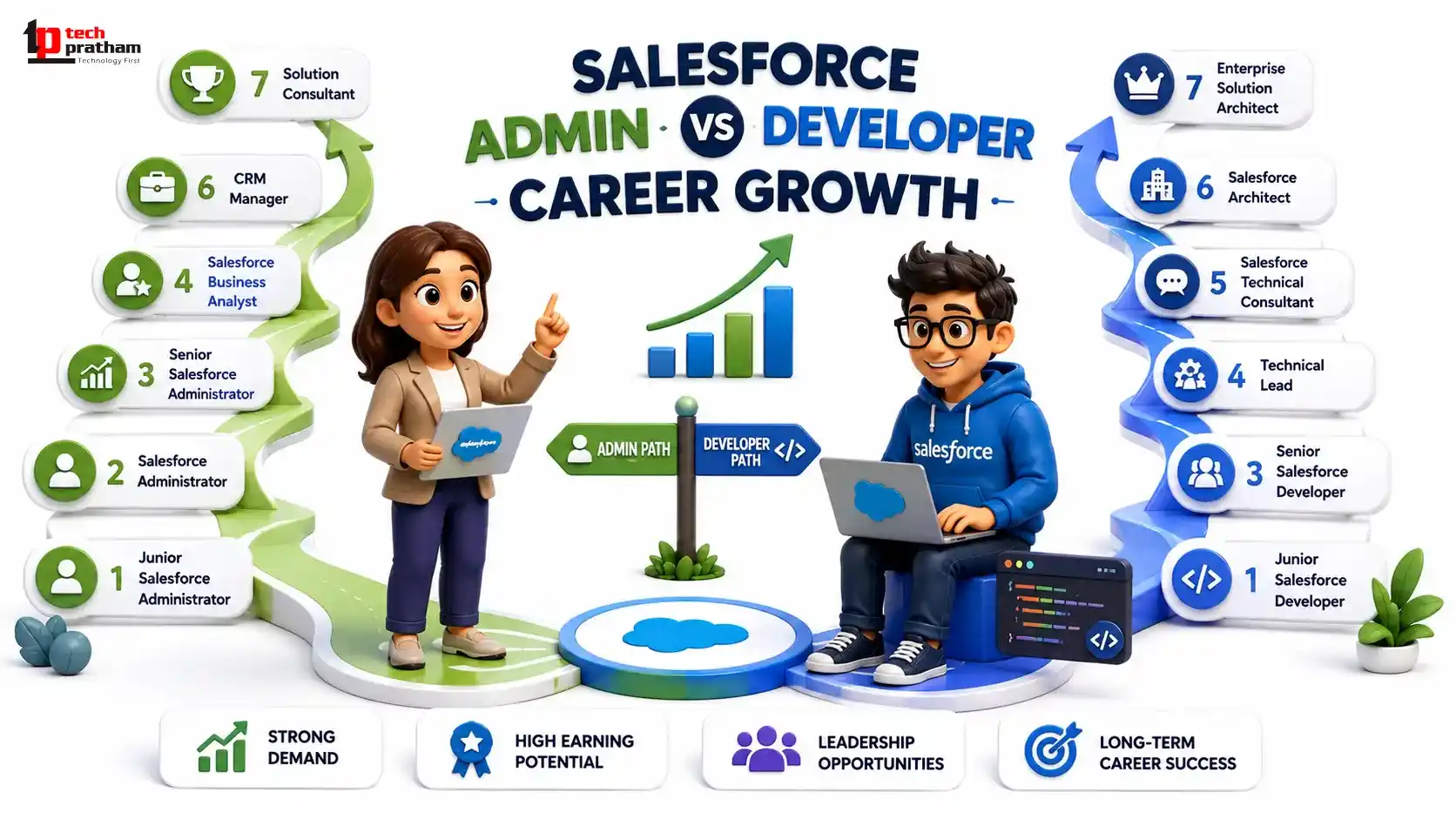
Both career paths provide excellent opportunities for advancement. As you gain experience, earn certifications, and work on real-world projects, you can move into senior and leadership roles.
Salesforce Administrator Career Path
A Salesforce Administrator typically progresses through the following roles:
- Junior Salesforce Administrator
- Salesforce Administrator
- Senior Salesforce Administrator
- Salesforce Business Analyst
- Salesforce Consultant
- CRM Manager
- Solution Consultant
With experience, administrators often specialize in business process optimization, CRM strategy, and consulting.
Salesforce Developer Career Path
A Salesforce Developer can advance into highly technical positions such as:
- Junior Salesforce Developer
- Salesforce Developer
- Senior Salesforce Developer
- Technical Lead
- Salesforce Technical Consultant
- Salesforce Architect
- Enterprise Solution Architect
Developers can also specialize in Lightning development, API integrations, DevOps, or Salesforce architecture, leading to higher-paying opportunities.
Can You Transition from Salesforce Administrator to Salesforce Developer?
Yes. Many Salesforce professionals begin their careers as Salesforce Administrators and later transition into Salesforce Development as they gain hands-on platform experience and develop technical skills. Starting as an Administrator helps you build a strong understanding of Salesforce CRM, business processes, and platform configuration, making it easier to learn advanced development concepts later. This career progression is common among professionals who want to expand their expertise and pursue more technical roles.
A practical roadmap includes:
- Complete a Salesforce Administrator Course.
- Gain practical experience managing Salesforce.
- Learn Apex, Lightning Web Components, SOQL, and APIs.
- Enroll in a Salesforce Developer Course.
- Build hands-on development projects.
- Earn Salesforce Developer Certification.
- Apply for Salesforce Developer roles.
This progression gives you a strong understanding of both business processes and technical development, making you a valuable professional in the Salesforce ecosystem.
How AI Is Transforming Salesforce Careers
Artificial Intelligence is becoming an integral part of Salesforce through innovations such as Einstein AI and Agentforce. Rather than replacing Salesforce professionals, AI is helping them work more efficiently.
Salesforce Administrators use AI-powered tools to automate repetitive tasks, generate reports, improve workflows, and enhance customer experiences. Salesforce Developers leverage AI to build intelligent applications, implement predictive features, and create advanced automation solutions.
Professionals who continuously upgrade their Salesforce and AI skills will have a competitive advantage as organizations increasingly adopt AI-powered CRM solutions.
Which Salesforce Career Has Better Future Scope?
Both Salesforce Administrators and Salesforce Developers have strong long-term career prospects because businesses continue to invest in Salesforce for customer relationship management, automation, and digital transformation. If you enjoy working with business users, configuring CRM solutions, and improving operational efficiency without writing code, Salesforce Administration is an excellent career choice.
Common Mistakes to Avoid
When choosing your Salesforce career path, avoid these common mistakes:
- Selecting Salesforce Development only because of higher salary expectations.
- Ignoring practical projects and focusing only on theory.
- Relying solely on certifications without gaining hands-on experience.
- Overlooking communication and problem-solving skills.
- Choosing a training program without live projects or certification support.
A quality Salesforce Training in India program should help you build practical experience alongside theoretical knowledge.
Frequently Asked Questions
1. What is the difference between a Salesforce Administrator and a Salesforce Developer?
2. Is Salesforce Administrator easier than Salesforce Developer?
3. Is Salesforce a good career choice in India?
4. Can I become a Salesforce Developer after working as an Administrator?
5. What skills are required for a Salesforce Developer?
Final Thoughts
Salesforce Administration and Salesforce Development are both rewarding career paths with excellent job opportunities and long-term growth. The right choice depends on your interests, technical aptitude, and career aspirations. If you prefer a no-code approach focused on CRM management, workflow automation, and user support, becoming a Salesforce Administrator is an excellent option. If you're passionate about programming, application development, and building custom Salesforce solutions, Salesforce Development offers exciting technical challenges and career advancement opportunities.
Related Articles
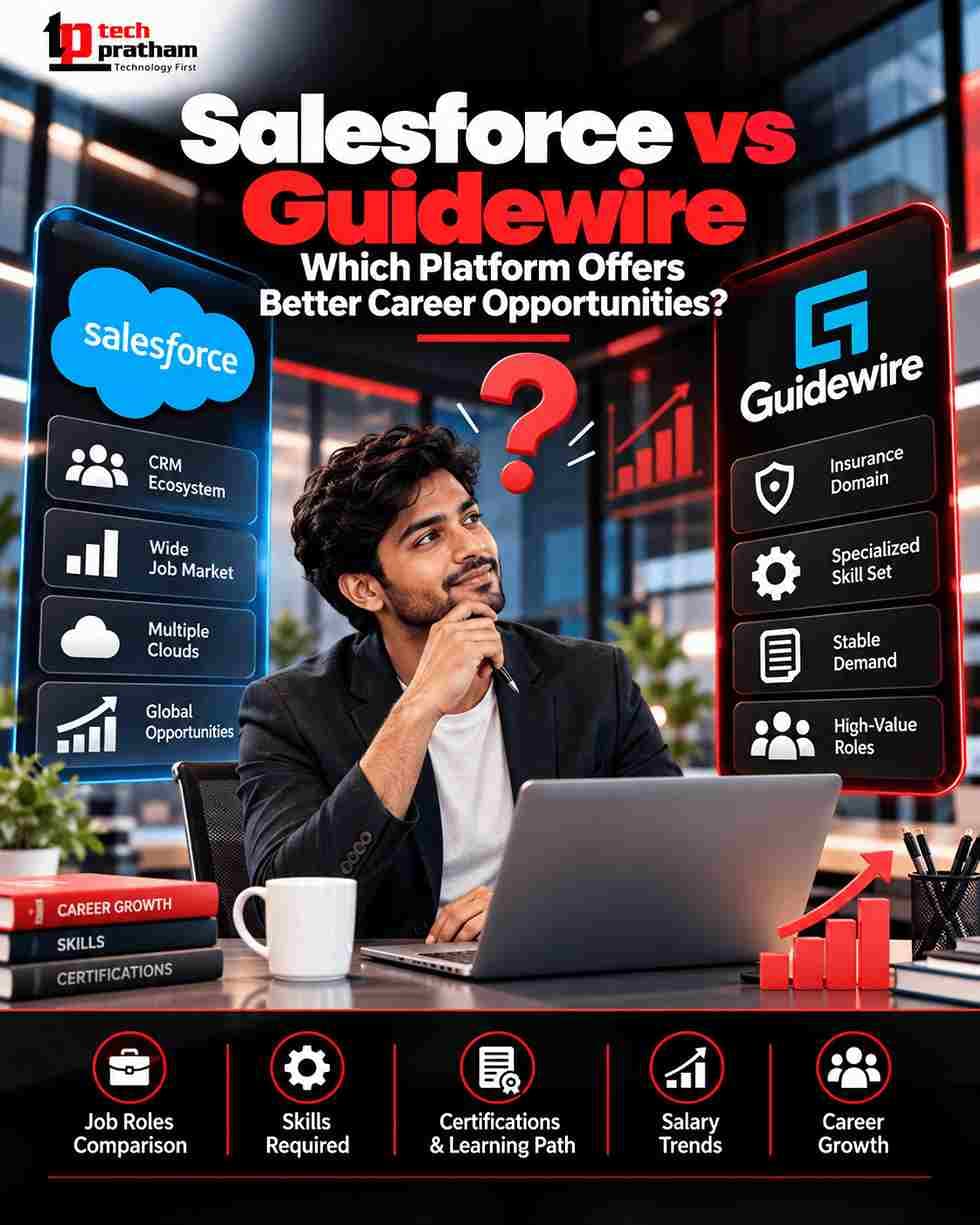
Salesforce vs Guidewire: Which Platform Offers Better Career Opportunities?
Compare Salesforce vs Guidewire career opportunities, job roles, skills, salary factors, and training options to choose the right career path.

Top 10 Salesforce Courses to Advance Your Career
Explore the top 10 Salesforce courses to build in-demand skills, earn certifications, and advance your career in the Salesforce ecosystem.
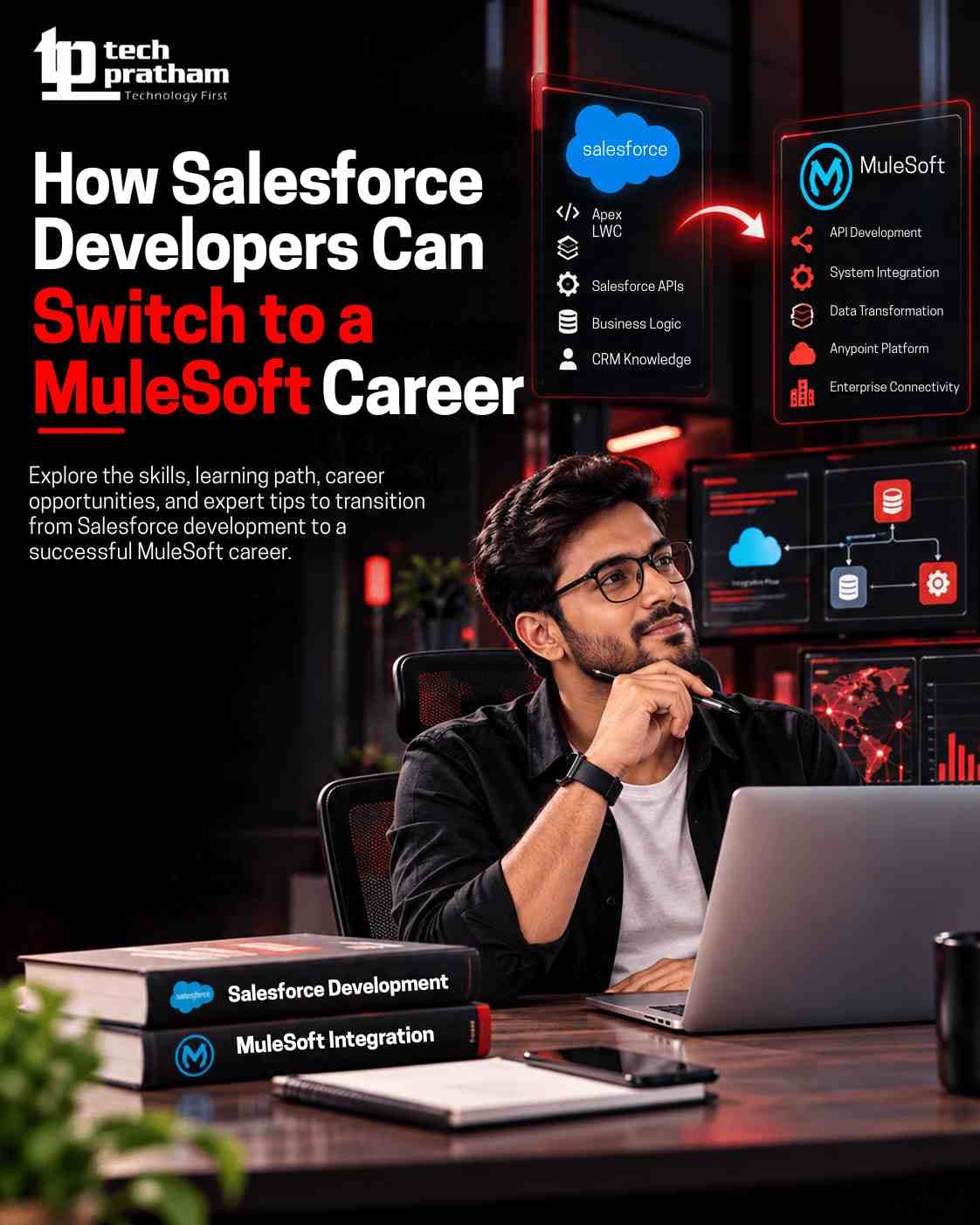
How Salesforce Developers Can Switch to a MuleSoft Career
Learn how Salesforce Developers can transition to MuleSoft, build integration skills, work with APIs, and explore new career opportunities.





 +91-8882178896
 +1 (343) 477-0926