Is Coding Required for Software Testing: A Complete Guide
 (1)_11zon.webp)
If you're planning to start a career in software testing, this is probably one of the first questions that comes to mind "Is Coding Required for Software Testing" Many beginners believe that strong programming skills are essential to become a software tester. However, the reality is quite different. While some testing roles involve coding, many software testing opportunities—especially in manual testing—require little to no programming knowledge. But before you celebrate and close this article, there's something important you should know. While many testing roles don't require programming skills initially, learning some coding can significantly boost your career growth, salary, and job opportunities. In this guide, we'll explore where coding is needed, where it isn't, and how you can build a successful career in software testing regardless of your technical background
Why Do People Think Coding Is Required for Software Testing?
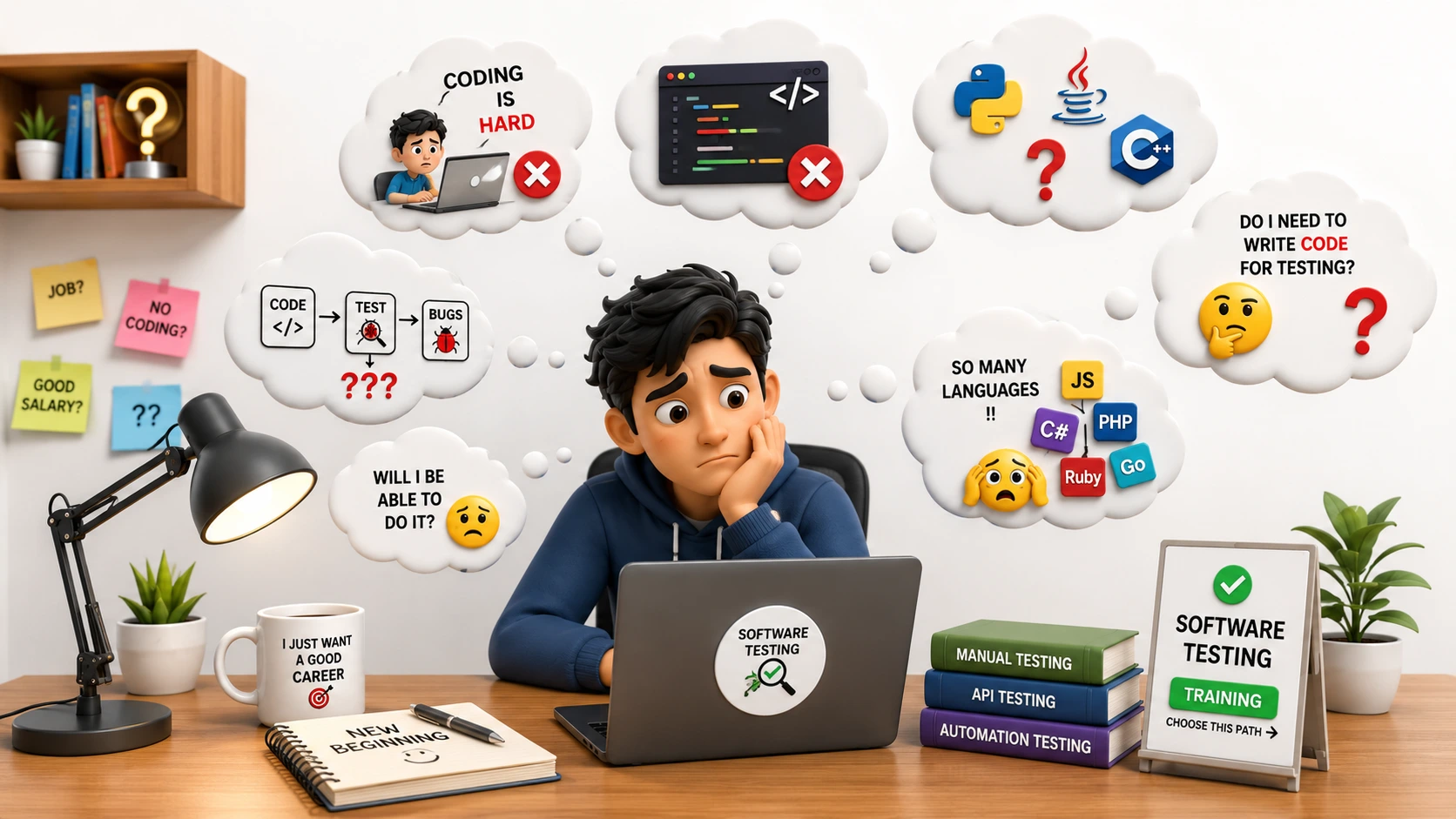
Most people assume that software testing is a part of software development. Their logic is simple:
- Developers write code.
- Software testers work with developers.
- Therefore, testers must also write code.
If Testers Don't Code, What Exactly They Do?
The answer is simple: testers ensure that software works correctly before it reaches users. Their job is to identify bugs, verify requirements, and make sure the application delivers a smooth and reliable experience. Instead of building features, testers focus on verifying whether those features function correctly. They analyze requirements, create test cases, execute test scenarios, identify defects, and report issues.
- Understanding requirements
- Creating test cases
- Executing tests
- Reporting bugs
- Retesting fixes
- Ensuring product quality
Imagine you're testing a food delivery app. You may check:
- Can users log in?
- Can users place an order?
- Is payment working?
- Does the app crash?
- Are notifications received?
Can I Get a Software Testing Job Without Coding?
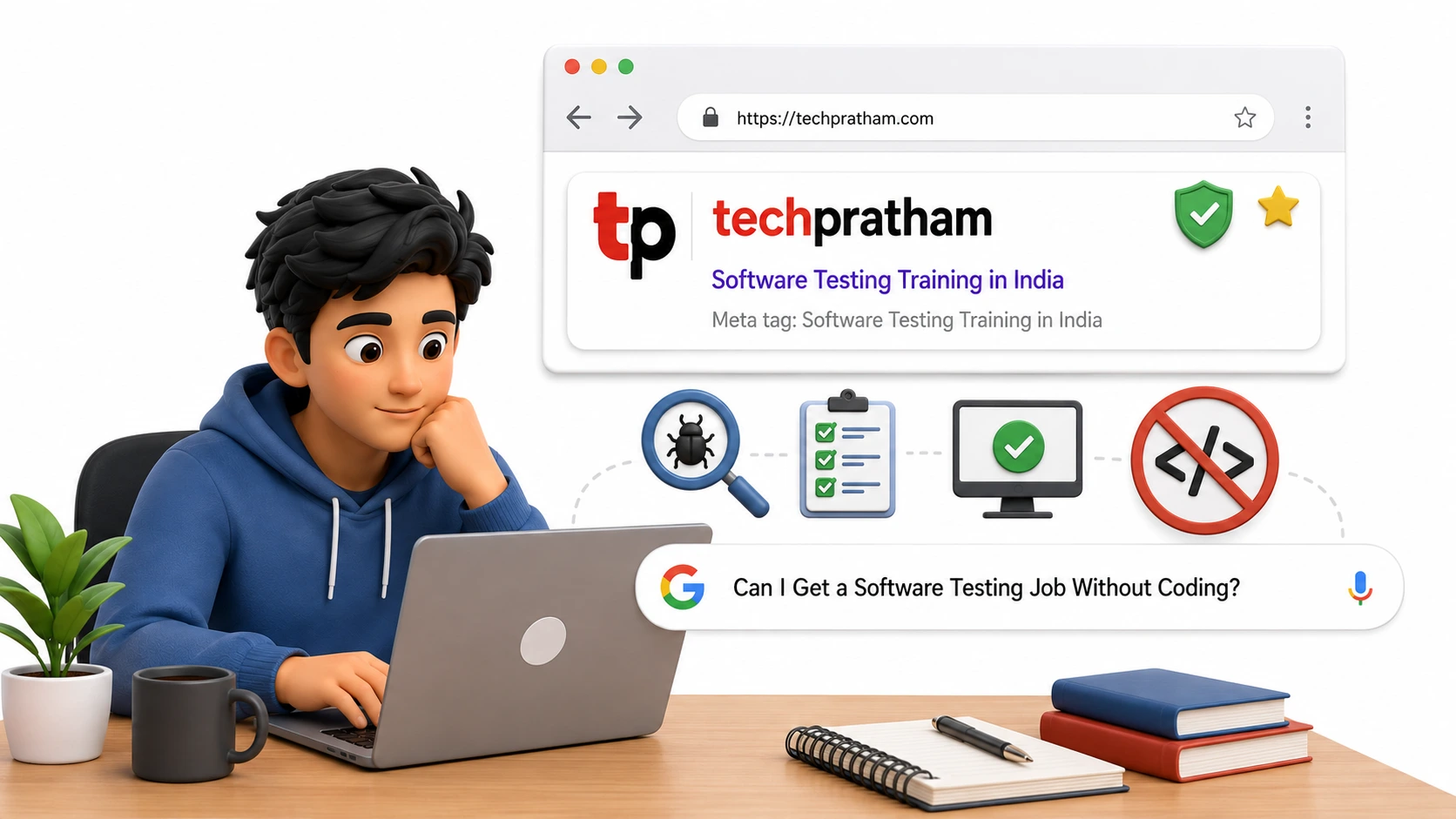
Yes, absolutely. In fact, many professionals start their software testing careers without any coding knowledge. Entry-level roles in Manual Testing primarily focus on understanding software requirements, creating test cases, executing tests, identifying bugs, and reporting issues. These responsibilities require analytical thinking, attention to detail, and problem-solving skills rather than programming expertise.
- Manual Testing
- Functional Testing
- User Acceptance Testing (UAT)
- QA Support Roles
- SDLC
- STLC
- Test Cases
- Defect Life Cycle
- Jira
- Agile Methodology
Even without coding knowledge. However, there is a catch. The industry is evolving rapidly. Which brings us to the next important question.
Will My Career Growth Be Limited Without Coding?
Ultimately, your growth in software testing depends on your willingness to learn and adapt. Coding can help you move faster and access more advanced roles, but strong testing knowledge, problem-solving abilities, and a quality-focused mindset will always remain valuable assets throughout your career.
Right Time for Beginners to Learn Coding
- Learn Software Testing Fundamentals.
- Practice Manual Testing on real applications.
- Understand Bug Tracking and Test Management Tools.
- Gain confidence in testing concepts.
- Start learning a programming language such as Java, Python, or JavaScript.
- Move into Automation Testing with tools like Selenium, Playwright, or Cypress.
Programming Language a Software Tester Learn First
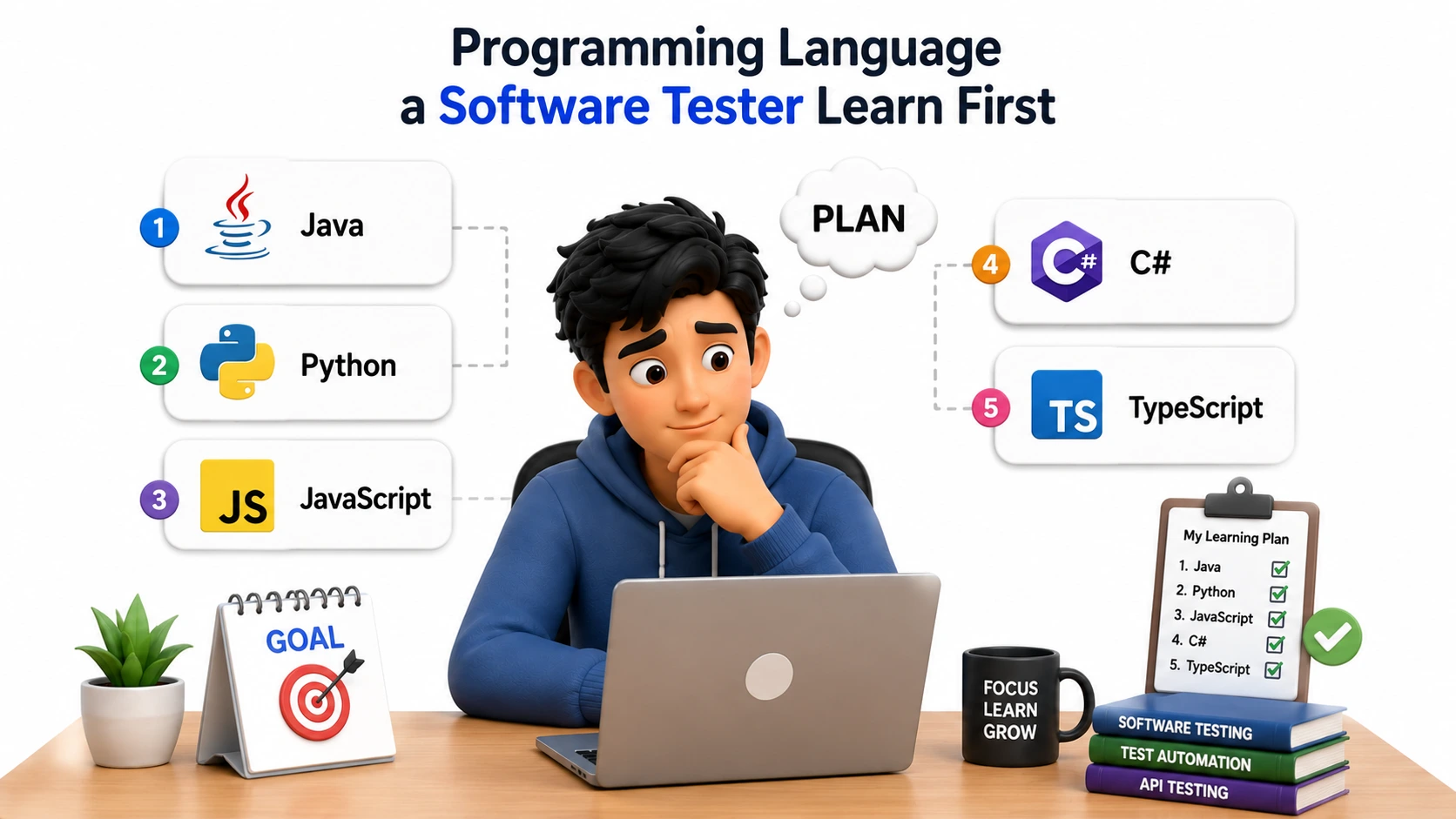
Once you've decided to learn coding, the next question is usually: Which programming language should I start with? The good news is that there is no single "perfect" language for software testing. The right choice depends on your career goals, the automation tools you plan to use, and the technologies commonly used in the industry. For most beginners, the focus should be on learning one language well rather than trying to learn multiple languages at the same time.
- Java
- Python
- JavaScript
- C#
- TypeScript
For beginners entering software testing, Java and Python are often the best starting points. Java is widely adopted in the automation testing industry, while Python offers an easier learning curve and faster development. Choose one, master the basics, and then focus on applying your coding skills to real testing scenarios rather than learning multiple languages at once.
What Skills Are More Important Than Coding
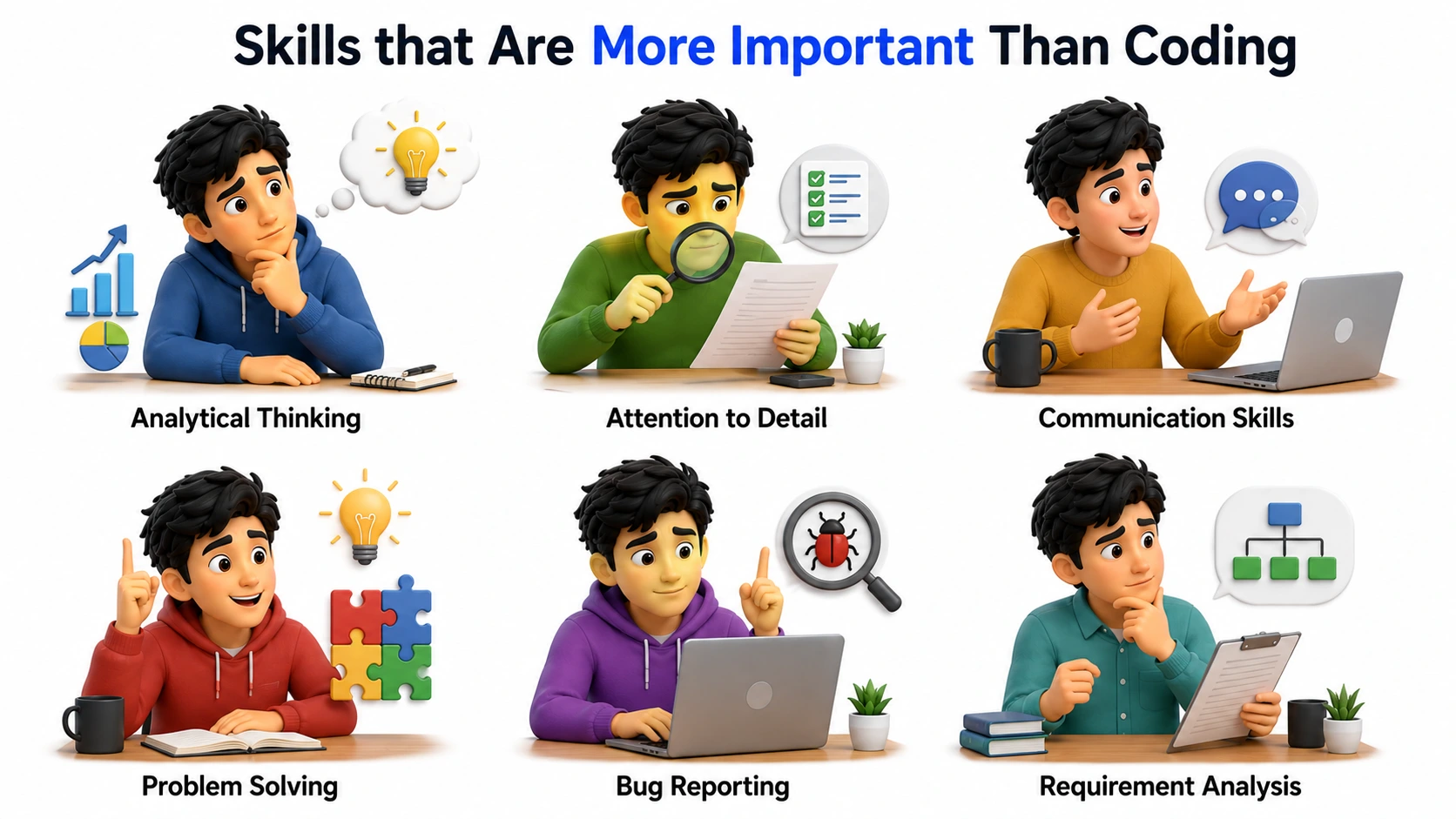
Surprisingly, employers often value these skills first:
- Analytical Thinking
- Attention to Detail
- Communication Skills
- Problem Solving
- Bug Reporting
- Requirement Analysis
Many companies prefer a good tester with average coding skills over a strong programmer who cannot identify defects effectively.
Frequently Asked Questions
1). Can a non-IT student become a software tester?
Yes, absolutely. Software testing is one of the few IT careers that welcomes candidates from diverse educational backgrounds. Many successful testers have transitioned from Mechanical, Civil, Electrical, Commerce, Mathematics, and other non-IT fields. While having a technical background can be helpful, it is not a mandatory requirement
2). Is Software Testing Easier Than Programming?
For many beginners, software testing is often easier to enter than software development because it requires less programming knowledge at the entry level. Manual testing focuses on understanding requirements, creating test cases, identifying defects, and ensuring software quality rather than building applications from scratch.
3). Is SQL Considered Coding?
Not exactly. SQL (Structured Query Language) is a specialized language used to interact with databases. Testers use SQL to retrieve, validate, update, and verify data stored in database systems. Although SQL involves writing queries and follows programming-like syntax, it is generally considered a query language rather than a full programming language.
4). Can I Learn Software Testing in 3 Months?
Yes, many beginners can learn the fundamentals of software testing within 3 to 4 months if they follow a structured learning plan and practice consistently. A typical learning roadmap includes understanding SDLC, STLC, test case design, defect life cycle, bug reporting tools, manual testing concepts, and basic SQL.
5). Is Automation Testing Possible Without Coding?
In most cases, no. Automation testing requires at least a basic understanding of programming because automated tests are created and maintained using scripts or code. Popular automation tools such as Selenium, Playwright, Cypress, and Appium rely on programming languages like Java, Python, JavaScript, or C#. Even low-code and no-code automation tools often require some technical understanding when dealing with complex test scenarios.
Final Verdict
So, is coding required for software testing? The answer is: No, coding is not required to start a software testing career. You can begin with Manual Testing, SQL, Jira, Agile, and API Testing. However, if your goal is faster career growth, better salary packages, and more opportunities, learning automation and basic programming later is highly recommended. The best approach is simple: Start without coding, get comfortable with testing concepts, and gradually add technical skills as your career progresses.
Related Articles
How to Start a Career in Software Testing in India as a Fresher
Start your QA career with this fresher guide covering software testing skills, courses, certifications, tools, and career opportunities in India.

How to Choose the Best Automation Testing Training in India: A Complete Beginner’s Guide
Learn how to choose the best Automation Testing Training in India, including tools, curriculum, projects, certification, and career scope.

How Long Does It Take to Learn Software Testing in India: A Complete Beginner’s Guide
Understand the software testing learning journey in India, from beginner concepts to practical skills and automation testing.