
What Recruiters Look for in Software Testers in 2026 | Software Testing Training in India
_11zon (1).webp)
The software testing industry is changing rapidly. A few years ago, companies mainly looked for testers who could execute test cases, identify bugs, and report issues. Today, that expectation has expanded significantly. With the rise of AI-powered tools, faster release cycles, DevOps practices, and modern automation frameworks, the role of a software tester has become more strategic than ever. As we move through 2026, recruiters are no longer searching for candidates who only know manual testing or have basic automation knowledge. They want professionals who can adapt to new technologies, think critically, communicate effectively, and contribute to the overall quality of a product
The Modern Software Tester: More Than Just Finding Bugs
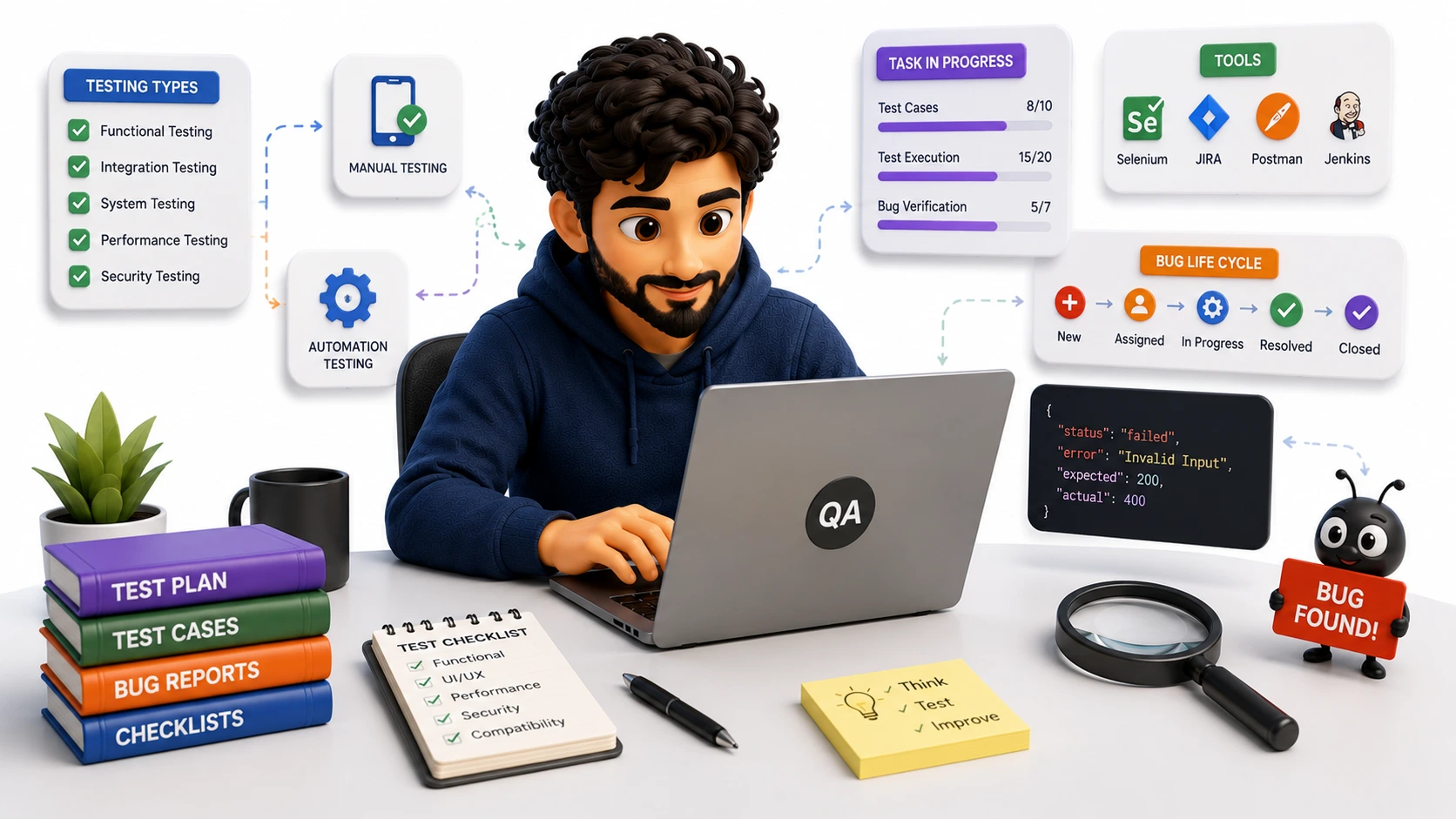
- Understand business requirements
- Think critically about potential risks
- Automate repetitive testing tasks
- Work in Agile teams
- Communicate effectively with stakeholders
- Adapt to new technologies and tools
The modern tester is not simply a bug finder; they are a quality advocate.
Strong Testing Fundamentals Still Matter
Despite the growing demand for automation and AI skills, recruiters continue to prioritize strong testing fundamentals. Many candidates make the mistake of learning tools before understanding testing concepts. However, experienced recruiters know that tools can be learned relatively quickly, while strong testing knowledge takes time to develop.
A candidate who understands these concepts can quickly adapt to new tools and technologies.
Automation Skills Are Becoming a Standard Requirement
Popular Automation Tools in 2026
- Playwright
- Selenium
- Cypress
- Appium
- WebDriverIO
Among these tools, Playwright continues to gain popularity because of its speed, reliability, and support for modern web applications. However, recruiters are interested in more than just tool names on a resume. They want to see practical experience.
Programming Knowledge Is No Longer Optional
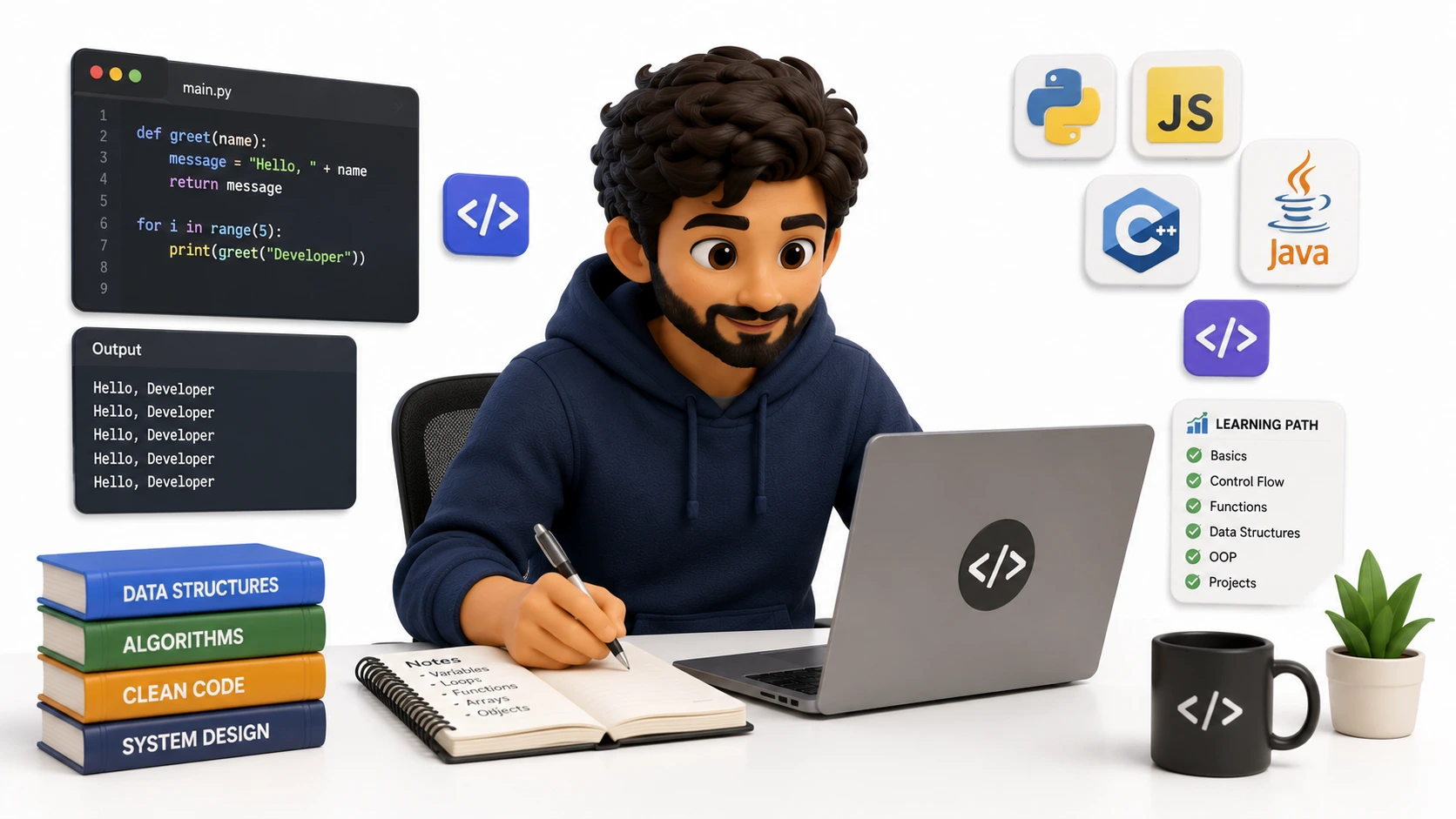
There was a time when testers could build successful careers without writing code. That reality has changed significantly. Modern testing tools require at least basic programming knowledge, especially in automation roles. Recruiters increasingly expect testers to possess at least basic programming knowledge. You don't need to become a full-time software developer, but understanding concepts such as variables, loops, functions, arrays, conditions, and object-oriented programming can significantly improve your effectiveness as a tester.
Programming Concepts Recruiters Commonly Evaluate
- Variables and Data Types
- Loops and Conditions
- Functions and Methods
- Arrays and Collections
- Object-Oriented Programming
- Exception Handling
Most In-Demand Languages for Testers
Even a basic understanding of programming can make you significantly more valuable in today's job market.
AI Is Changing Software Testing
Modern applications are built around APIs. Mobile apps, web applications, cloud platforms, and microservices all rely heavily on APIs to communicate. As a result, recruiters increasingly view API testing as a core skill rather than an advanced specialty.
Understanding how to validate requests and responses, work with JSON data, verify status codes, and use tools like Postman can significantly increase your value as a tester. A candidate who can test both the user interface and the underlying APIs is often considered more versatile and capable of identifying deeper issues within an application. Many companies are adopting AI-powered solutions for:
- Test case generation
- Test maintenance
- Self-healing automation
- Bug prediction
- Test optimization
Recruiters increasingly appreciate candidates who understand how AI can improve testing efficiency. The goal is not to compete with AI but to learn how to use it effectively.
API Testing Has Become a Core Skill
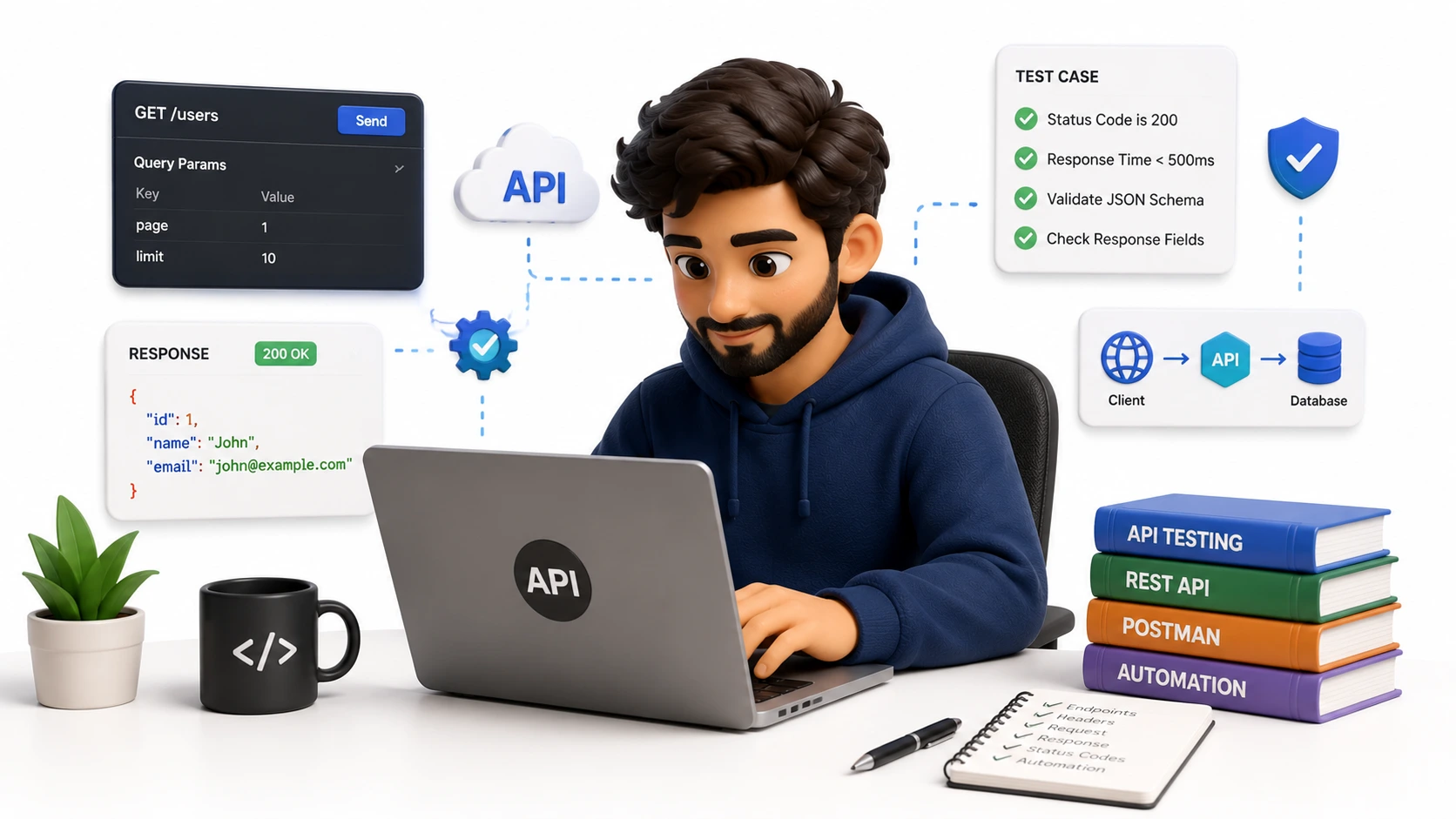
Modern applications rely heavily on APIs and microservices. As applications become more complex, recruiters increasingly value candidates who can test beyond the user interface.
Essential API Testing Skills
- Understanding HTTP methods
- Working with JSON data
- Validating API responses
- Testing authentication mechanisms
- Verifying status codes
- Using API testing tools
Popular API Testing Tools
- Postman
- Swagger
- REST Assured
- Playwright API Testing
A tester who understands API testing can often identify issues much earlier in the development process.
Agile and DevOps Knowledge Gives You an Edge
Most organizations now follow Agile development practices. Recruiters often expect candidates to understand how testing fits within Agile and DevOps environments.
Important Agile Concepts
- Sprint Planning
- User Stories
- Daily Standups
- Sprint Reviews
- Retrospectives
DevOps Concepts Worth Understanding
- Continuous Integration (CI)
- Continuous Deployment (CD)
- Automated Testing Pipelines
- Build Management
Communication Skills Remain a Major Hiring Factor
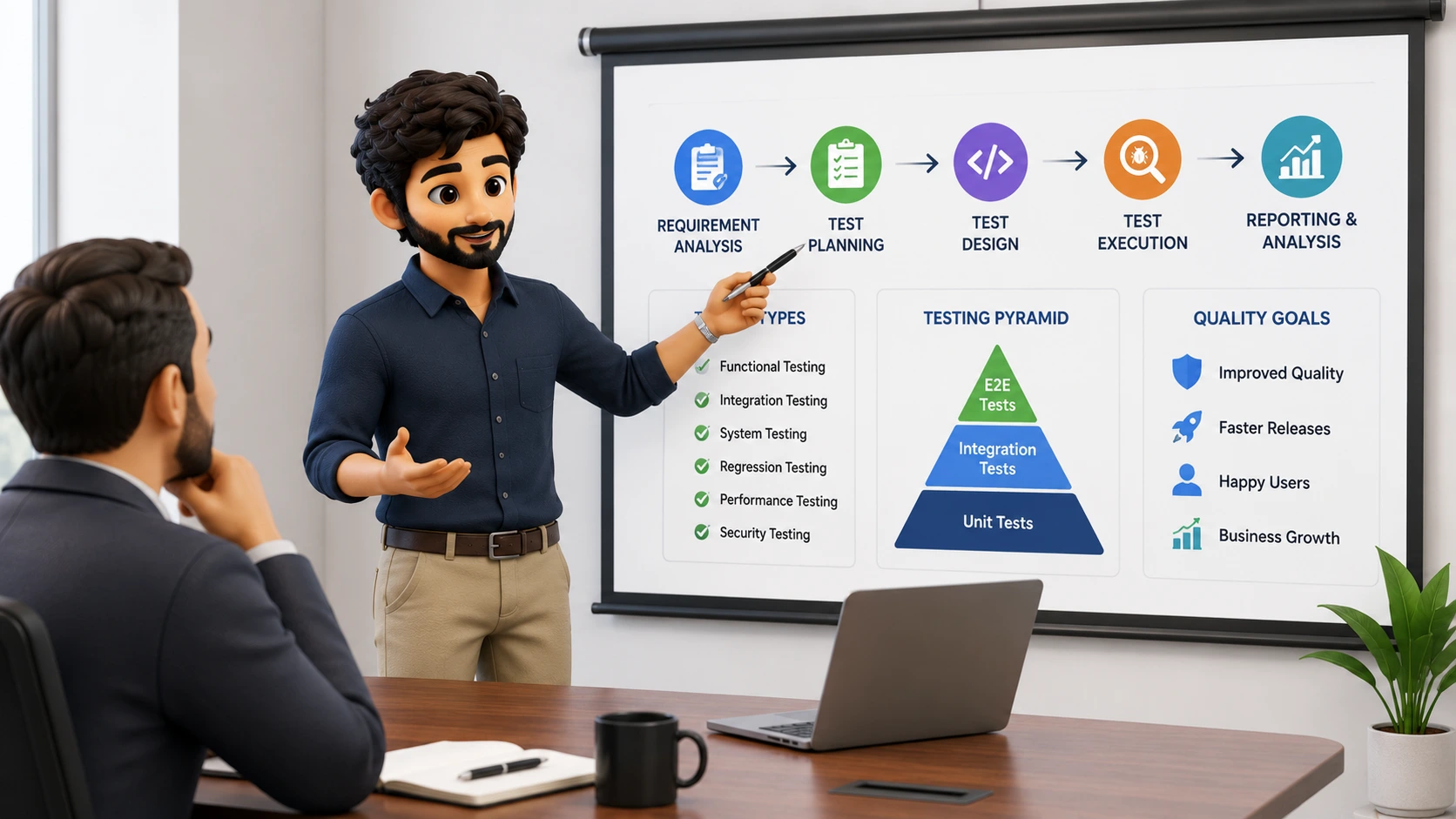
Many candidates underestimate the importance of communication. In reality, software testers spend a significant amount of time discussing requirements, reporting defects, collaborating with developers, and presenting testing results.
Software testers regularly interact with:
- Developers
- Product Managers
- Business Analysts
- Project Managers
- Clients
A poorly written bug report can create confusion, while a well-documented issue can save hours of investigation time. Recruiters consistently look for candidates who can:
- Explain issues clearly
- Ask relevant questions
- Write professional documentation
- Participate confidently in meetings
Strong communication skills can often distinguish top-performing testers from average ones.
Critical Thinking and Exploratory Testing
One quality that consistently impresses recruiters is critical thinking. Anyone can execute predefined test cases. Great testers go beyond those instructions and ask important questions. What happens if a user enters invalid information? What happens if the network connection fails? What if thousands of users access the system simultaneously? Could a particular feature create unexpected business risks? This mindset helps identify issues that automated scripts and predefined test cases may never discover. Recruiters highly value candidates who demonstrate curiosity and analytical thinking during interviews.
- What could go wrong?
- What edge cases exist?
- How might users misuse this feature?
- What business risks are involved?
This analytical mindset helps uncover defects that scripted testing may miss.
Recruiters often Asked Questions Like:
- Have you built an automation framework?
- Can you handle dynamic web elements?
- How do you generate test reports?
- How do you maintain large automation suites?
- How do you perform cross-browser testing?
Conclusion
The role of a software tester in 2026 extends far beyond executing test cases and reporting bugs. Recruiters are searching for professionals who combine strong testing fundamentals with automation expertise, programming knowledge, API testing skills, AI awareness, and effective communication. The most successful candidates are not necessarily those who know the most tools. Instead, they are the individuals who continuously learn, adapt to new technologies, and demonstrate their skills through real-world projects.
Frequently Asked Questions
1. What is the most important skill recruiters look for in software testers in 2026?
Recruiters look for a combination of strong testing fundamentals, automation testing skills, problem-solving abilities, and effective communication. Candidates who can combine technical knowledge with analytical thinking have a significant advantage in the job market.
2. Do software testers need programming knowledge in 2026?
Yes. While not every testing role requires advanced coding skills, recruiters increasingly prefer candidates who understand programming concepts and can work with automation tools such as Playwright, Selenium, or Cypress.
3. How important is AI knowledge for software testers?
AI awareness is becoming a valuable skill in modern testing environments. Recruiters appreciate candidates who understand how AI-powered tools can assist with test generation, maintenance, defect analysis, and productivity improvement.
4. What can freshers do to impress software testing recruiters?
Freshers can stand out by building real-world projects, learning automation tools, understanding API testing, maintaining a GitHub portfolio, and demonstrating a strong understanding of testing fundamentals during interviews.
6. Is Techpratham Institute Good?
Techpratham Institute can be a good option for learners who want practical exposure to software testing and automation testing technologies. However, before enrolling, it is recommended to evaluate factors such as course curriculum, trainer experience, hands-on project opportunities, student reviews, placement support, and the technologies being taught.
Related Articles
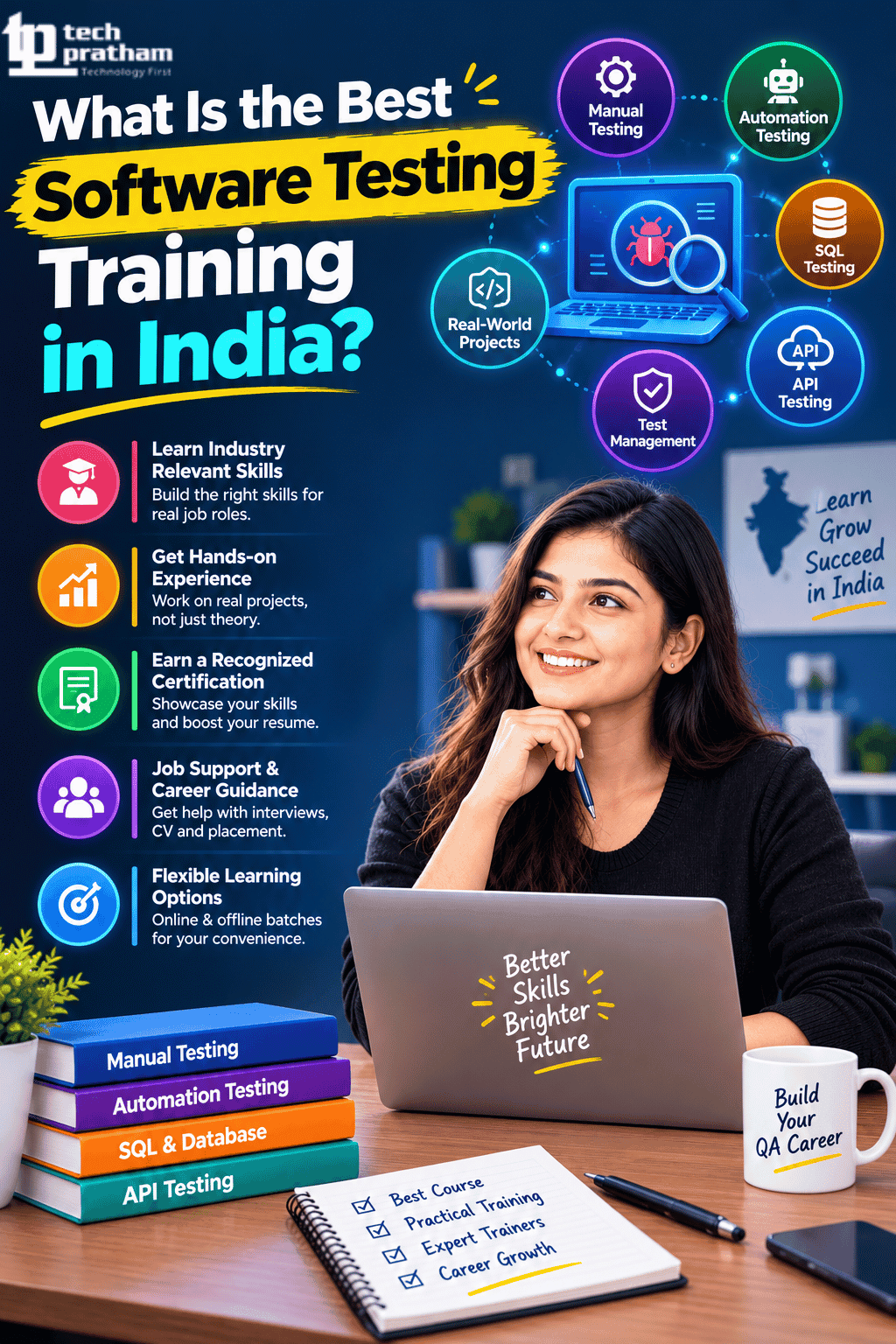
What Is the Best Software Testing Training in India?
Explore the best Software Testing Training in India with practical projects, expert guidance, certification, and career support.
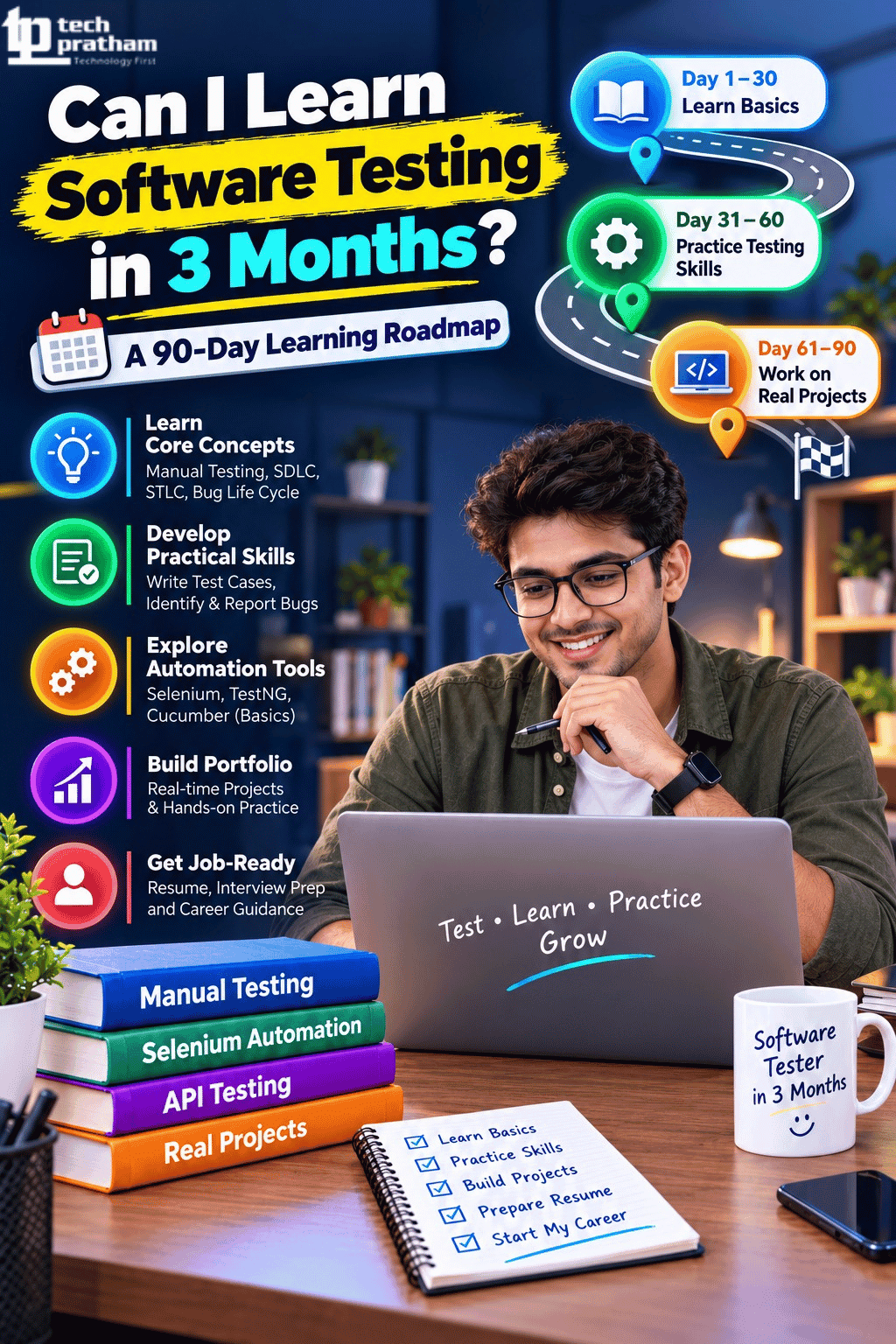
Can I Learn Software Testing in 3 Months? A 90-Day Learning Roadmap
Learn software testing in 3 months with a 90-day roadmap covering manual testing, test cases, SQL, API testing and automation tools.
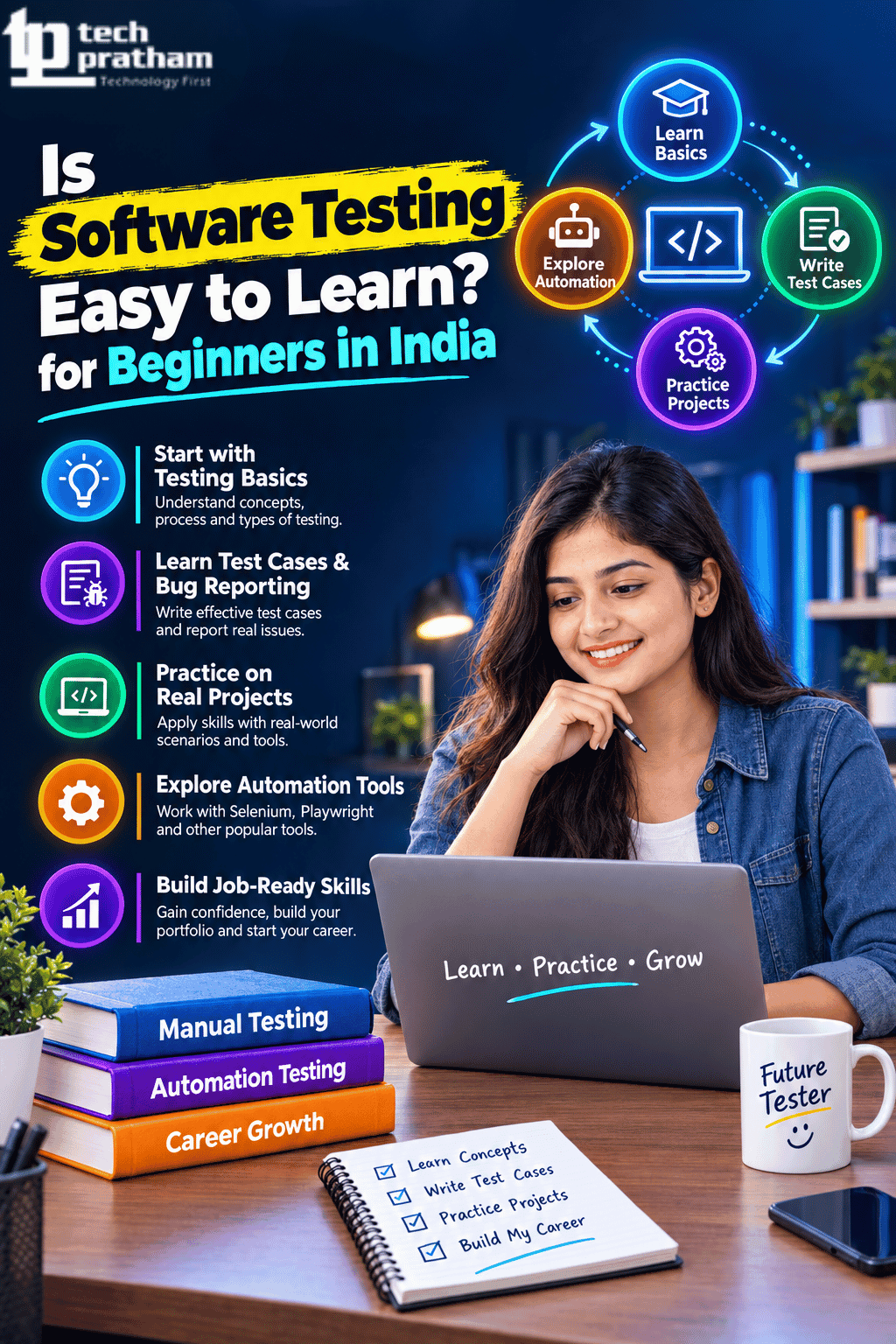
Is Software Testing Easy to Learn for Beginners in India
Learn whether software testing is easy for beginners in India, explore essential skills, course modules and career opportunities.





 +91-8882178896
 +1 (343) 477-0926