
How AI is Transforming Software Testing in 2026
_11zon.webp)
Artificial Intelligence is transforming the software testing industry by introducing smarter, faster, and more efficient testing processes. Traditional testing methods often require significant manual effort, time, and maintenance, but AI-powered testing tools are helping organizations automate complex tasks with greater accuracy. In 2026, companies are rapidly adopting AI in software testing to improve software quality, accelerate release cycles, and support modern development practices like Agile and DevOps. AI technologies such as Machine Learning, predictive analytics, and intelligent automation can automatically generate test cases, identify high-risk areas, detect bugs early, and optimize regression testing.
Overview of Artificial Intelligence (AI) in Software Testing
Key Highlights of AI in Software Testing:
- Automates repetitive and time-consuming testing tasks
- Helps identify bugs and errors more accurately
- Improves test coverage and testing efficiency
- Reduces human effort and overall testing time
- Supports faster software releases and better user experience
- Uses machine learning to predict potential software failures
Types of AI Applications in Software Testing
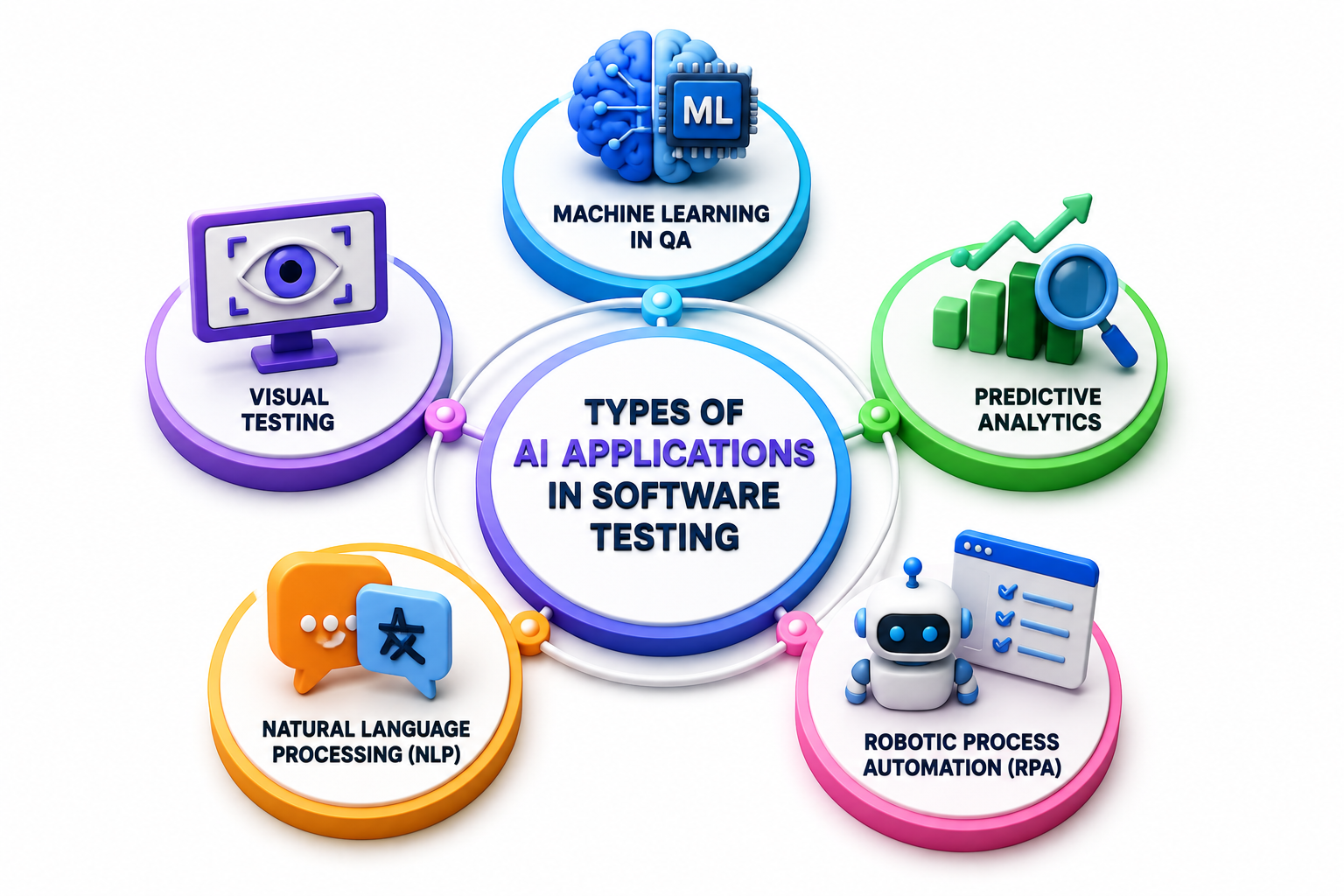
1) Machine Learning in QA
Machine Learning (ML) in QA helps testing systems learn from previous test data and improve over time. It can automatically detect patterns, predict defects, and optimize test cases.
2) Visual Testing
Visual Testing focuses on checking the user interface (UI) for visual bugs such as layout issues, broken designs, or misaligned elements. AI compares screenshots and detects even small UI changes.
3) Predictive Analytics
Predictive Analytics uses AI to analyze historical data and predict future software failures. It helps teams identify risky modules before testing begins.
4) Natural Language Processing (NLP)
5) Robotic Process Automation (RPA)
AI Tools for Software Testing
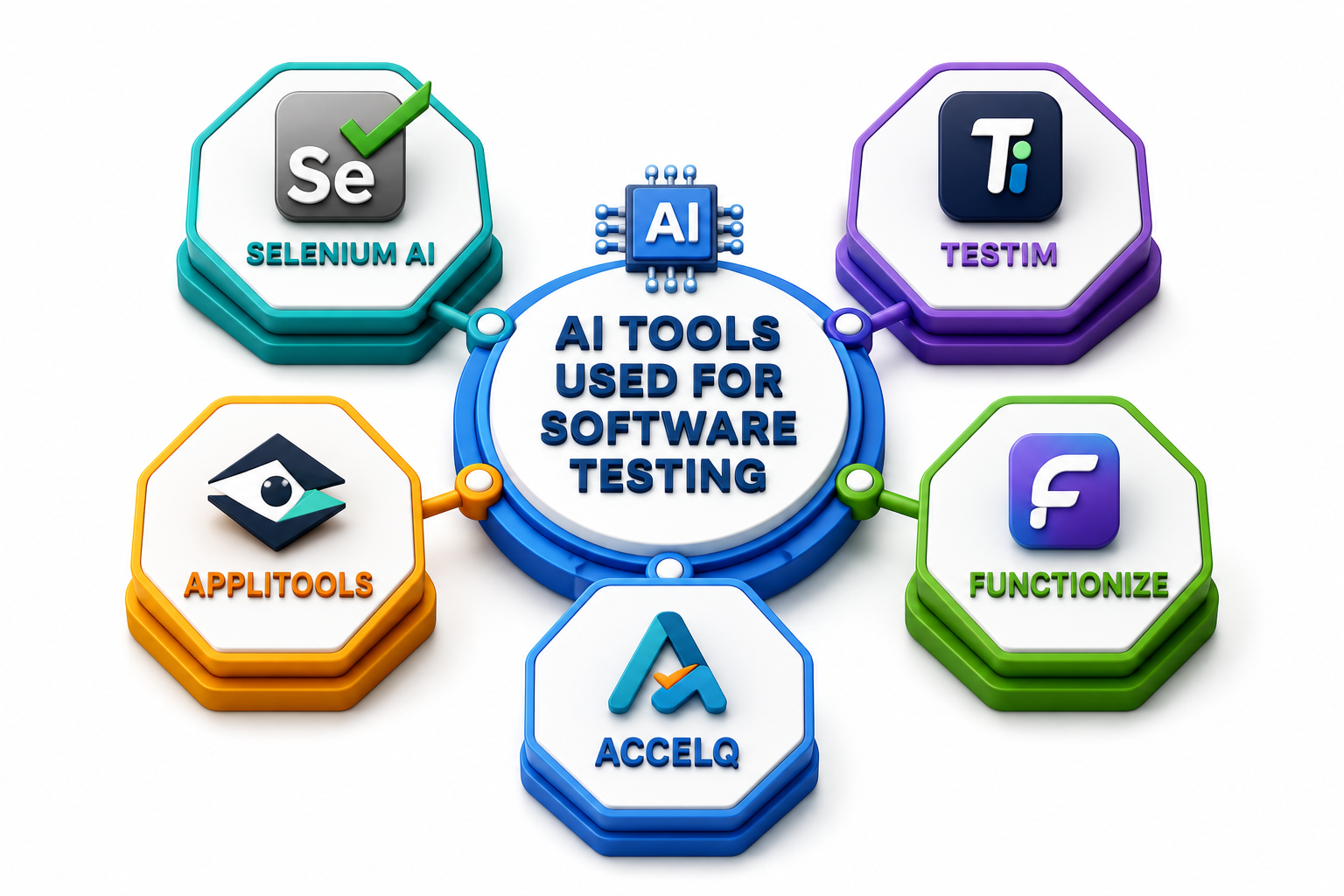
1) Selenium AI
2) Testim
3) Applitools
4) Functionize
5) ACCELQ
How AI Helps with Software Testing Tasks
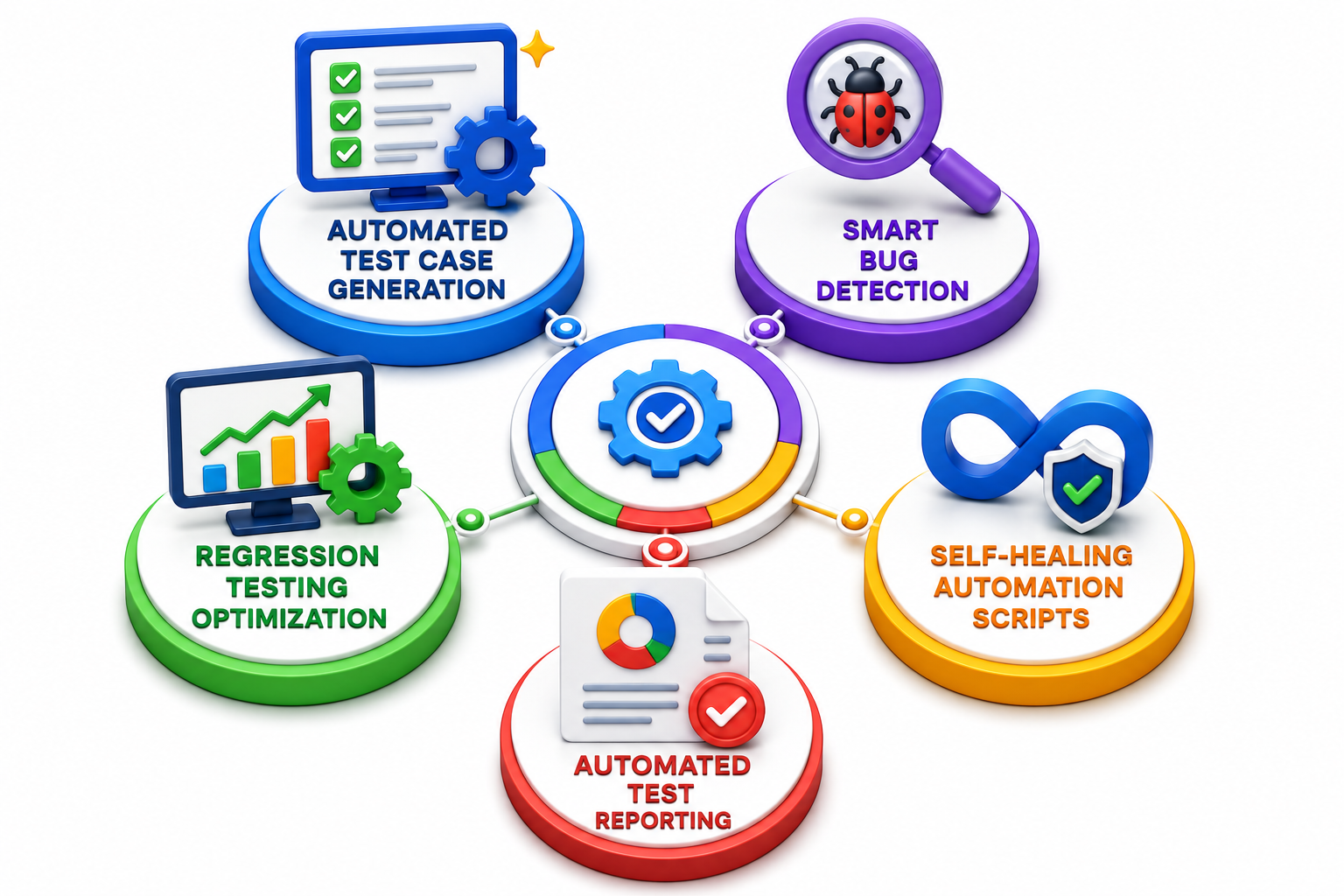
- AI automates test case generation by analyzing application behavior and user flows, improving coverage and saving manual effort.
- It enhances bug detection by identifying patterns, anomalies, and hidden defects early in the development cycle.
- AI optimizes regression testing by selecting only relevant test cases, reducing execution time and improving efficiency.
- It supports self-healing automation scripts that automatically adjust to UI or application changes, reducing maintenance work.
- AI also generates automated test reports with clear insights, helping teams quickly analyze results and improve decision-making.
AI Software Testing vs Manual Testing
Top Companies Using AI in Software Testing
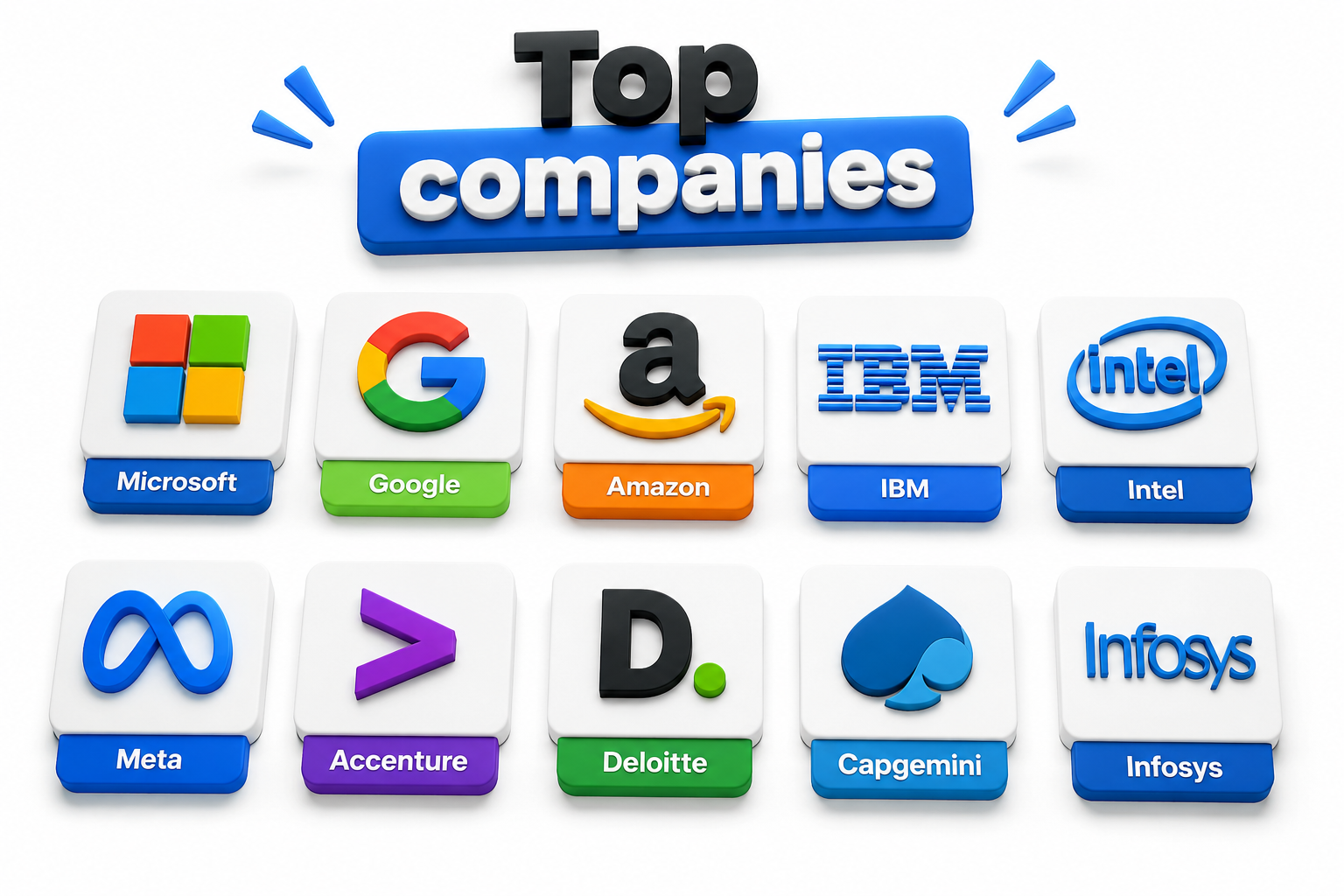
Top companies across the world are increasingly adopting Artificial Intelligence (AI) in software testing to improve software quality and accelerate development processes. Companies like Google, Microsoft, IBM, and Amazon are using AI-powered testing tools to automate repetitive testing tasks and improve accuracy. AI helps these organizations detect bugs faster, optimize regression testing, and enhance user experience through smart automation. Many companies are also using machine learning and predictive analytics to identify software risks before deployment. AI-driven testing reduces manual effort, speeds up product releases, and improves overall efficiency.
Benefits and Challenges of AI in Software Testing
Benefits of AI in Software Testing
- Faster test execution and quicker software releases
- Automated test case generation
- Reduced human errors in testing
- Improved bug detection accuracy
- Self-healing automation scripts
Challenges of AI in Software Testing
- High initial implementation cost
- Learning curve for testers and QA teams
- Dependency on quality training data
- Complex integration with existing tools
- Limited human understanding in AI decisions
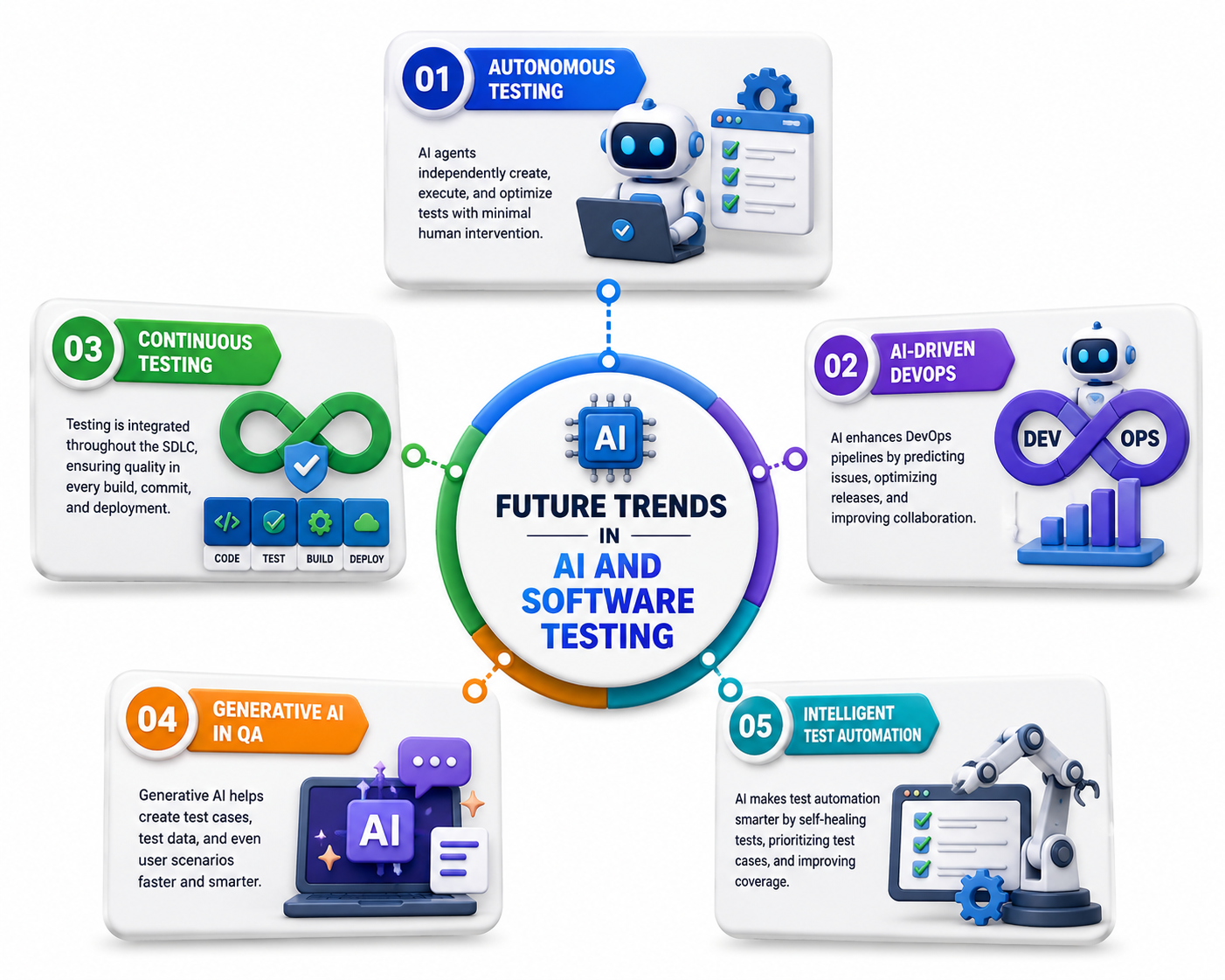
Future of AI in Software Testing
Why Choose TechPratham?
TechPratham is a trusted platform for students and professionals who want to build a successful career in software testing and IT. The institute focuses on practical, industry-oriented training that helps learners gain real-world knowledge and job-ready skills. From Manual Testing and Automation Testing to API Testing and Agile methodologies, the curriculum is designed according to current industry demands. Students also receive hands-on project experience, expert mentorship, interview preparation, and career guidance, making it easier for freshers and working professionals to confidently enter the IT industry. With updated training programs that include the latest trends in AI and software testing, TechPratham provides a strong foundation for long-term career growth.
Conclusion
Artificial Intelligence is transforming the software testing industry by making testing processes faster, smarter, and more efficient. From automated test case generation to intelligent bug detection and self-healing automation, AI is helping organizations improve software quality while reducing manual effort and testing time. Modern AI-powered tools are also supporting Agile and DevOps practices by enabling continuous and intelligent testing throughout the software development lifecycle. Although AI in software testing comes with challenges such as implementation cost and the need for skilled professionals, its long-term benefits are driving rapid adoption across the IT industry. As technologies like Generative AI, predictive analytics, and intelligent automation continue to evolve, the future of software testing will become even more data-driven and automation.
FAQ's
1) Can AI replace software testers?
2) Which AI testing tool is best for beginners?
3) Is coding required for AI testing?
4) What is the future of AI in QA testing?
5) Is AI testing a good career option in 2026?
Related Articles

Software Testing Training for Beginners: Step-by-Step Career Guide
This beginner-friendly guide explains the step-by-step process to start a successful career in software testing. It Covers all Important Topics.

Manual Testing vs Automation Testing: Which Career is Better in 2026
Compare manual vs automation testing careers in 2026, including salary, jobs, and future scope for freshers.