
Software Testing Training for Beginners: Step-by-Step Career Guide

Software Testing Training is increasing rapidly as companies focus more on software quality and user experience. A professional Software Testing Training program helps beginners learn practical testing skills, understand real-time projects, and start a successful IT career without requiring advanced coding knowledge. Software Testing has become one of the fastest-growing career options in the IT industry because companies today focus heavily on delivering high-quality, bug-free, and user-friendly applications. From startups to multinational companies, every organization needs skilled software testers to ensure their websites, mobile apps, and software products work smoothly before reaching customers. As technology continues to grow rapidly, the demand for trained testing professionals is also increasing year after year. A professional Software Testing Training program helps beginners build strong practical knowledge in manual testing, automation testing, bug reporting, test case creation, SDLC, STLC, Agile methodology, and real-time project handling.
Key factor
Key Factors
What is Software Testing?
Key Objectives of Software Testing:
- Identify bugs and defects in the application
- Ensure the software works as expected
- Improve user experience and software quality
- Verify functionality, performance, and security
- Reduce development and maintenance costs
- Deliver a reliable and error-free product
Types of Software Testing:
- Manual Testing – Testing performed manually without automation tools
- Automation Testing – Testing performed using tools and scripts
- Functional Testing – Checks whether features work properly
- Performance Testing – Tests speed, stability, and responsiveness
- Security Testing – Identifies vulnerabilities and security risks
Why Learn Software Testing?
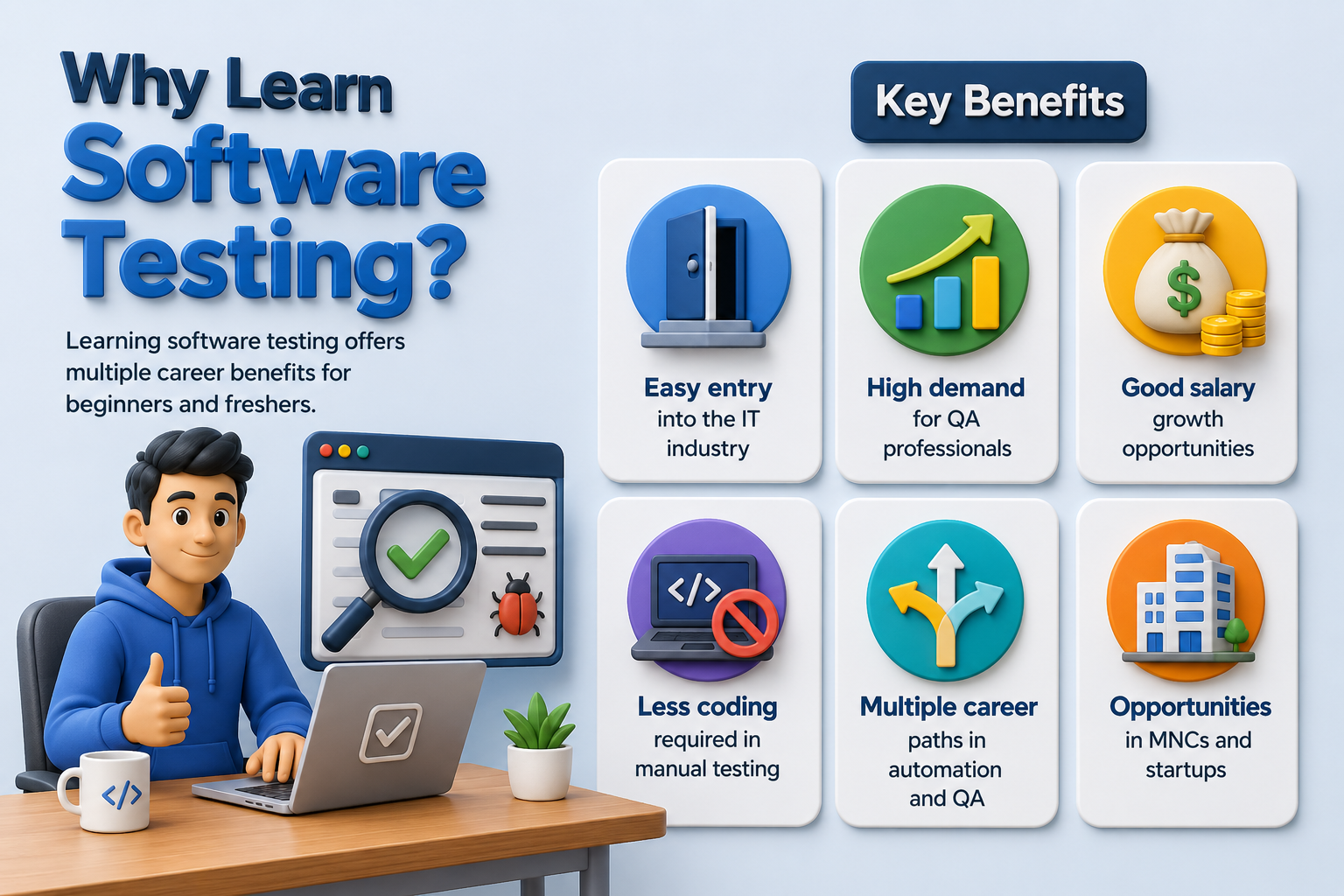
Key Benefits of Learning Software Testing
Who Should Join This Course?
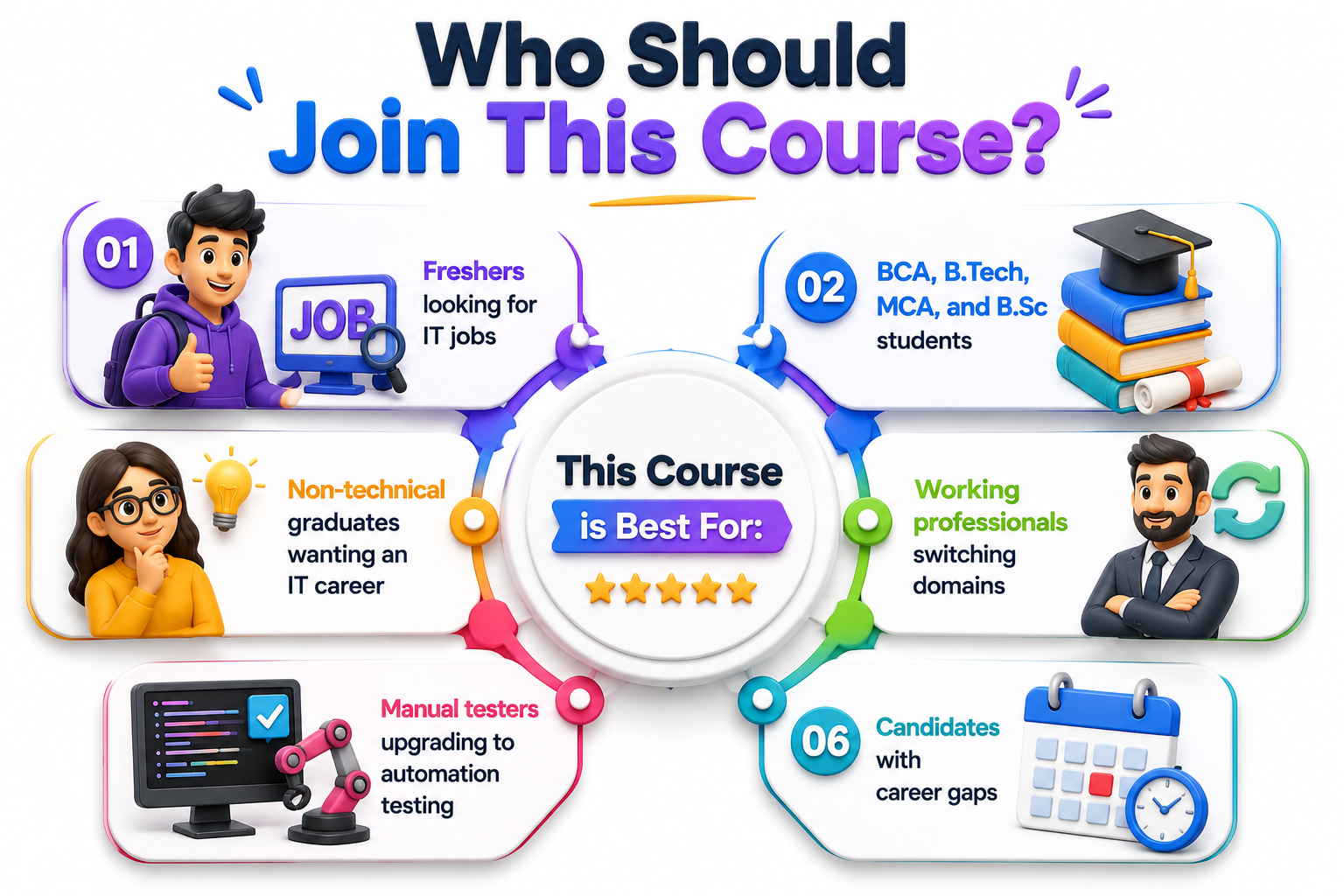
- Freshers looking for IT jobs
- BCA, B.Tech, MCA, and B.Sc students
- Non-technical graduates wanting an IT career
- Working professionals switching domains
- Manual testers upgrading to automation testing
- Candidates with career gaps
Skills You Learn in Software Testing Training
2) Bug Tracking:
Top Cities with High Demand for Software Testing Training
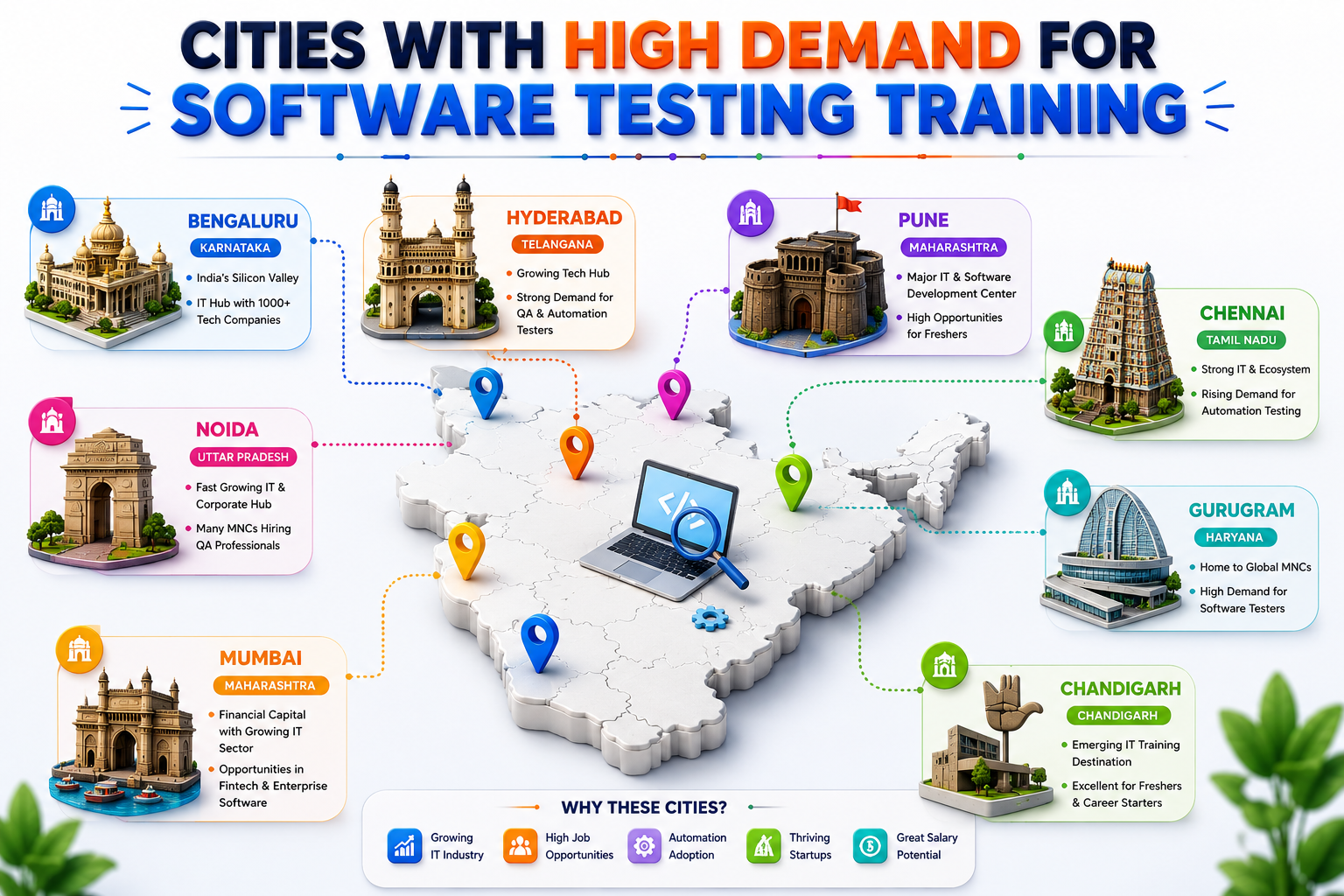
The demand for Software Testing Training is increasing rapidly across major Indian cities as the IT industry continues to expand at a fast pace. Today, almost every company developing software, mobile applications, cloud platforms, or web solutions requires skilled QA professionals to ensure product quality and performance before release. With businesses focusing heavily on user experience, security, and error-free applications, the need for trained software testers has grown significantly in cities like Bengaluru, Hyderabad, Pune, Chennai and Noida . These cities are home to leading IT companies, startups, and multinational organizations that actively hire manual testers, automation testers, QA engineers, and Selenium professionals.
With businesses focusing heavily on user experience, security, and error-free applications, the need for trained software testers has grown significantly in cities like Bengaluru, Hyderabad, Pune, Chennai, Noida, and Gurugram. These cities are home to leading IT companies, startups, and multinational organizations that actively hire manual testers, automation testers, QA engineers, and Selenium professionals.Salary Trends in Software Testing
Career Opportunities After Software Testing Training

Software testing offers excellent career opportunities for beginners as well as experienced professionals in the IT industry. As companies continue developing websites, mobile applications, cloud platforms, and enterprise software, the demand for skilled testing professionals is increasing rapidly. A professional Software Testing Training program helps candidates build practical testing skills, understand real-time projects, and prepare for multiple QA and automation-related job roles Today, companies across industries such as IT services, banking, healthcare, e-commerce, fintech, cloud computing, and mobile application development are actively hiring skilled testing professionals.
- QA Tester
- Manual Tester
- Automation Tester
- QA Engineer
- Selenium Tester
- Test Analyst
- Software Test Engineer
Software Testing Certifications
Software testing certifications help professionals validate their testing knowledge, improve technical skills, and increase job opportunities in the IT industry. These certifications are highly valuable for freshers, manual testers, automation testers, and working professionals who want to build a strong career in quality assurance and software testing. Many IT companies prefer certified professionals because certifications demonstrate practical understanding of testing concepts, testing tools, Agile methodologies, and automation frameworks. A certification can also improve your resume, increase credibility during interviews, and help you stand out from other candidates in competitive job markets.
Popular Software Testing Certifications
- ISTQB Certification
- Selenium Certification
- Agile Testing Certification
- Automation Testing Certification
- API Testing Certification
- Performance Testing Certification
- Cypress Automation Certification
- Appium Mobile Testing Certification
- JMeter Testing Certification
- DevOps Testing Certification
Examination Details for Software Testing Certifications
Common Examination Details
- Exam Mode: Online or Authorized Test Center
- Exam Type: Multiple Choice Questions (MCQs)
- Duration: Usually 60 to 120 minutes
- Number of Questions: 40 to 100 questions
- Passing Score: Typically 60% to 75%
- Eligibility: Basic understanding of software testing concepts
- Exam Level: Foundation, Intermediate, or Advanced
- Certification Validity: Depends on certification provider
Why Choose TechPratham for Software Testing Training?
TechPratham is a trusted choice for aspiring software testing professionals who want to build a strong foundation in IT. The training program is designed with a perfect blend of theoretical knowledge and hands-on practical experience, helping learners understand real-world testing scenarios used in the industry today.
At TechPratham, students get exposure to manual testing, automation testing, test case design, bug tracking tools, Agile methodology, and API testing, ensuring they are job-ready from day one. The curriculum is regularly updated to match current industry standards and demands.
One of the key advantages of choosing TechPratham is its expert trainers with real-time industry experience, who guide students step-by-step with practical examples and live projects.
Frequently Asked Questions
Can I Learn Software Testing Without Coding?
Which is better: Manual Testing or Automation Testing?
Do software testing jobs require coding?
How long does it take to learn software testing?
Is software testing easy for beginners?
Conclusion
Related Articles

How AI is Transforming Software Testing in 2026
AI is transforming software testing in 2026 by automating tests, detecting bugs faster, improving accuracy, and speeding up software delivery.

Manual Testing vs Automation Testing: Which Career is Better in 2026
Compare manual vs automation testing careers in 2026, including salary, jobs, and future scope for freshers.